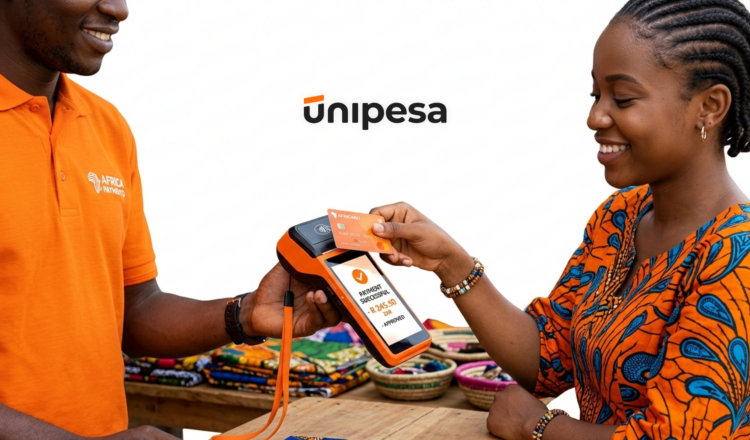
Why Digital Wallets Are Becoming the New Financial Hub for African Consumers

Across Africa, a silent transformation is reshaping how people store money, make payments, build credit, and access essential financial services. What once required a bank branch, a paper form, or a long queue can now be done through a simple mobile wallet app. From Lagos to Nairobi, Accra to Kigali, digital wallets are no longer a niche alternative—they are becoming the central financial hub for consumers and small businesses.
This shift is not just a trend; it is a structural change powered by rapid smartphone adoption, fintech innovation, stronger digital infrastructure, and evolving consumer expectations. In many markets, digital wallets have already outpaced traditional banking apps in usage, trust, and relevance.
But why are digital wallets gaining such dominance? And what makes them so perfectly suited for African markets?
This article breaks down the forces driving wallet adoption, the features consumers value most, and how platforms like Unipesa are shaping a wallet-centric financial future across the continent.
1. Wallets Solve Africa’s Biggest Financial Friction: Accessibility
The foundation of Africa’s fintech revolution is accessibility. Traditional banking in many African countries still comes with:
- high minimum balance requirements
- complex onboarding
- limited branch networks
- slow processing
- poor customer support
- distrust arising from legacy systems
For millions, a bank account is simply not an option.
Digital wallets remove all those barriers.
A wallet can be opened in minutes using basic KYC information and a smartphone. No branch visits. No forms. No minimum deposits. No waiting.
In much of Africa, the first financial account a person ever owns is a mobile wallet—not a bank account. This gives wallets an enormous advantage: they become the consumer’s “home base” for all things money from the very start.
2. Wallets Work Seamlessly With How Africans Already Transact
Unlike Western markets dominated by card infrastructure, African payments rely on:
- mobile money
- USSD payments
- P2P transfers
- cash-in/cash-out agents
- QR payments
Wallets sit comfortably in the middle of this entire ecosystem.
They are designed to be interoperable, flexible, and compatible with the diverse ways Africans earn and spend. A wallet user can:
- send money via phone number
- fund their wallet with mobile money
- withdraw at an agent
- use QR to pay in-store
- receive business payouts
- buy airtime or data
- pay bills instantly
One tool. Endless use cases.
This multi-functionality makes wallets more valuable than single-purpose banking apps or card products.
3. Wallets Offer a Superior User Experience Compared to Banks
African consumers value simplicity, speed, and reliability.
Digital wallets excel in all three:
- payments are instant
- onboarding is easy
- balances update in real time
- customer service is digital-first
- fees are transparent
- apps are lightweight and fast
In contrast, traditional banks often still rely on legacy systems that slow down transactions, break integrations, or complicate onboarding.
Wallet platforms—built entirely on modern APIs—deliver the frictionless UX users want.
This is especially important in Nigeria, Kenya, and Ghana, where payment reliability is a top consumer priority. Wallets take this seriously with redundancy, instant notifications, and always-on processing.
4. Wallets Are Becoming Multi-Product Ecosystems
The wallet market is no longer about simple money transfers. Today’s digital wallets increasingly resemble mini financial supermarkets, offering everything in one place.
Modern wallets now include features like:
- virtual cards
- buy now, pay later (BNPL)
- savings pockets
- micro-loans
- bill payments
- P2P transfers
- international remittances
- merchant payments
- cashback and rewards
- digital dollar accounts (where allowed)
This evolution turns wallets into universal financial companions.
Instead of downloading five different apps for banking, FX, payments, savings, and loans, consumers use one platform for all financial needs.
Wallets are building the “super app” model faster than banks ever could.
5. Wallets Empower the Gig and Informal Economy
Africa’s workforce is unique:
- over 80% of jobs are informal
- gig platforms are booming
- SMEs need fast payouts
- daily cash flow is essential
This is where wallets shine.
They support:
- instant payouts for riders, drivers, freelancers
- micro-savings for daily income earners
- quick transfers to family
- payment acceptance for micro-merchants
- spending insights for budgeting
The ability to access money instantly—not tomorrow, not next week—is game-changing for people who live on fast-moving cash flows.
Wallets provide exactly this.
6. Cross-Border Wallets Are Making African Trade Faster
Africa’s cross-border trade is massive but difficult. Different currencies, slow bank transfers, and high remittance fees have long hindered consumers and SMEs.
Wallets are rewriting this story by offering:
- multi-currency balances
- instant cross-border P2P
- cheaper remittance options
- API-based international payments
- transparent exchange rates
Platforms like Unipesa’s wallet infrastructure are helping businesses pay suppliers, send payouts, and move money across borders without friction.
This is especially powerful for:
- freelancers
- e-commerce sellers
- logistics businesses
- exporters
- diaspora families
- digital entrepreneurs
Wallets are enabling a borderless African financial experience.
7. Wallet Data Unlocks the Future of Inclusive Lending
Wallets generate rich transaction data:
- spending patterns
- income streams
- bill payments
- merchant payments
- P2P transfers
- payment frequency
This creates a powerful alternative credit score.
For millions with no banking history, wallet data is the first real financial footprint they ever create. Fintechs can then use this footprint to:
- offer micro-loans
- provide BNPL options
- personalize credit limits
- extend merchant financing
This is how Africa can finally bridge the lending gap—through wallet-driven financial identity.
Platforms like Unipesa support this by offering integrated lending rails that can plug into wallet environments via APIs.
8. Wallets Deliver High-Grade Security at Scale
Users trust wallets because they offer:
- biometric login
- device binding
- transaction PINs
- fraud detection
- anomaly monitoring
- real-time alerts
- encryption by default
- 24/7 monitoring
Many wallets operate more securely than traditional banking apps, thanks to modern architectures and real-time risk engines.
This makes consumers feel safe storing money digitally.
9. Wallets Reduce Fee Pain Points for Consumers
Traditional banking fees can be complex:
maintenance fees, card fees, SMS fees, minimum balance penalties…
Wallets simplify everything:
- low or zero fees
- transparent pricing
- no hidden charges
- free P2P transfers (many times)
- affordable bill payments
Consumers appreciate fairness and clarity—and wallets deliver.
10. Wallets Are a Gateway to the Future of Embedded Finance
As more industries adopt digital financial services—ride-hailing, e-commerce, agriculture, logistics—wallets become the infrastructure holding it all together.
Wallets enable:
- in-app payments
- loyalty rewards
- instant refunds
- automated payouts
- digital tipping
- micro-savings and lending
- subscription payments
For digital platforms, wallets are the engine powering everything.
Unipesa’s wallet infrastructure is built exactly for this: powering embedded finance for apps across Africa.
Conclusion: Wallets Are Becoming Africa’s New Financial Operating System
Digital wallets are no longer just another payment tool—they are becoming Africa’s financial OS.
They are:
- more accessible than banks
- more flexible than cards
- more secure than cash
- more intuitive than legacy apps
- more relevant to African lifestyles
As digital payments expand, smartphones become cheaper, and cross-border commerce grows, wallets will continue to be the center of African financial life.
Platforms like Unipesa are playing a critical role by providing the infrastructure that allows businesses, fintechs, and digital platforms to integrate world-class wallet experiences with ease.
The future of African finance is wallet-first—and it’s happening faster than anyone expected.