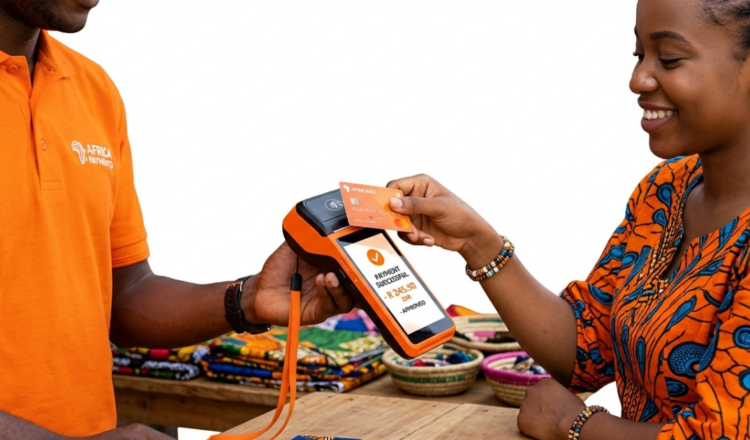
How Payment Processing Works in African Markets

Introduction: Payment Processing in Africa Is Not One System
In many parts of the world, payment processing follows a relatively standardized flow:
- A customer initiates a transaction
- A payment processor routes it
- Funds are settled through banking networks
In Africa, the reality is fundamentally different.
There is no single system.
No universal standard.
No unified infrastructure.
Instead, payment processing operates across a fragmented landscape of financial ecosystems, each with its own:
- Payment methods
- Technical integrations
- Regulatory requirements
- Operational constraints
Understanding how payment processing works in Africa means understanding:
how multiple systems interact and how they are connected
The Core Layers of Payment Processing
Despite fragmentation, most payment flows in African markets follow a multi-layered structure.
1️⃣ User Interface Layer
This is where the transaction begins.
Examples include:
- Mobile wallets
- Merchant apps
- USSD interfaces
- POS terminals
- Web and mobile checkout systems
This layer defines:
- User experience
- Payment initiation method
- Authentication flow
2️⃣ Payment Processing Layer
The transaction is routed and managed here.
It includes:
- Payment gateways
- Processors
- APIs
At this stage:
- The transaction is validated
- The appropriate payment method is selected
- The request is routed to the relevant financial system
3️⃣ Financial Network Layer
The transaction is executed here.
It may involve:
- Mobile money systems
- Banks
- Card networks
Each system operates independently and has:
- Its own protocols
- Its own response times
- Its own reliability characteristics
4️⃣ Settlement Layer
Once approved, the transaction must be settled.
This includes:
- Fund transfers between institutions
- Currency handling (if applicable)
- Reconciliation processes
Settlement can be:
- Instant
- Delayed
- Dependent on intermediaries
The Unique Complexity of African Payment Systems
What makes African payment processing complex is not the existence of these layers — but how they behave.
Fragmentation Across Markets
Each country has:
- Different dominant payment methods
- Different providers
- Different infrastructure maturity
This means:
Payment processing must be adapted per market.
Multiple Payment Methods
Unlike more standardized markets, Africa operates across a mix of:
- Mobile money
- Bank transfers
- Cards
- Cash-based digital systems (via agents or USSD)
Each method:
- Requires separate integration
- Has different success rates
- Behaves differently under load
Infrastructure Variability
Performance varies significantly across systems:
- Some providers have high reliability
- Others experience downtime or latency
- Network conditions differ by region
This affects:
- Transaction success rates
- Processing speed
- User experience
A Typical Payment Flow in Practice
Let’s break down a simplified transaction flow.
Step 1: Payment Initiation
A user initiates a payment via:
- mobile app
- web checkout
- USSD
Step 2: Request Processing
The payment request is sent to a processing system.
At this stage:
- payment details are validated
- routing logic is applied
Step 3: Routing
The system determines:
- which payment method to use
- which provider to route through
Step 4: Authorization
The transaction is sent to the financial network.
The system checks:
- account balance
- authentication credentials
- transaction validity
Step 5: Response
The transaction is:
- approved
- declined
- or retried
Step 6: Settlement
Funds are transferred and reconciled.
Key insight:
Every step in this flow can vary depending on the market.
The Challenge: Scaling This Across Multiple Markets
Now imagine running this process across 10+ countries.
You must:
- Integrate multiple payment systems
- Handle different currencies
- Adapt to different regulations
- Maintain consistent performance
The problem:
Each market introduces new variables into the same flow.
This leads to:
- increased complexity
- higher operational costs
- slower expansion
Where Payment Infrastructure Becomes Critical
To manage this complexity, companies are increasingly relying on infrastructure platforms.
This is where Unipesa plays a key role.
How Unipesa Simplifies Payment Processing
Unipesa abstracts the complexity of African payment systems by providing:
- A unified API layer
- Access to multiple payment methods
- Cross-market connectivity
- Built-in compliance support
This allows businesses to:
- integrate once
- access multiple markets
- operate through a single system
From Fragmentation to Unified Processing
Without infrastructure:
- each integration is separate
- each market requires customization
- each system must be managed individually
With infrastructure:
- payment processing becomes standardized
- routing becomes centralized
- scaling becomes more efficient
Payment Optimization: Beyond Basic Processing
Modern payment processing is not just about execution—it’s about optimization.
This includes:
- improving success rates
- reducing costs
- minimizing latency
Techniques include:
- smart routing
- fallback mechanisms
- performance monitoring
Unified infrastructure significantly enhances these capabilities.
The Role of International Payments
Many African businesses operate beyond a single market.
This introduces:
- currency conversion
- settlement complexity
- regulatory dependencies
Payment systems must:
- support multi-currency flows
- optimize international transaction paths
- ensure compliance across jurisdictions
Reliability and Resilience
In African markets, reliability is a critical factor.
Payment systems must handle:
- network variability
- provider downtime
- fluctuating performance
This requires:
- redundancy
- dynamic routing
- continuous monitoring
The Future of Payment Processing in Africa
Payment processing is evolving toward:
- greater standardization
- increased automation
- real-time optimization
- deeper integration across systems
Infrastructure platforms will play a central role in this evolution.
Conclusion: Payment Processing as a System, Not a Feature
Payment processing in Africa is not a simple function.
It is a multi-layered system that requires:
- integration
- coordination
- optimization
The companies that succeed are those that:
- understand the complexity
- design for fragmentation
- leverage infrastructure
Because in African markets:
Payment processing is not just about moving money.
It is about connecting systems efficiently at scale.