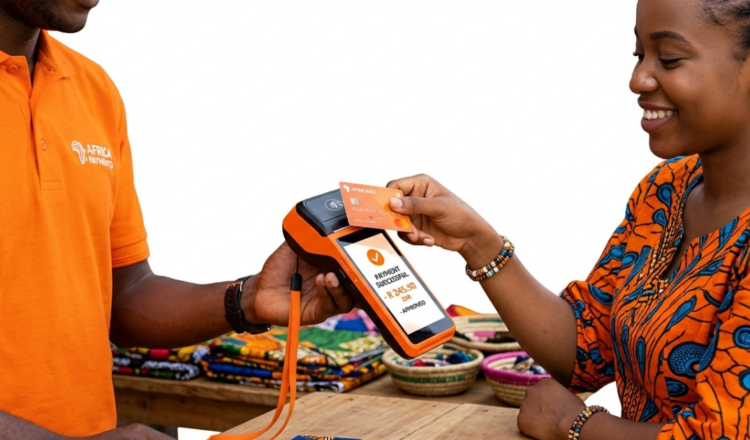
Why POS Networks Are Critical for Agent Banking

Introduction: Agent Banking Runs on Physical Access
Agent banking has become one of the most effective models for expanding financial access.
Instead of relying on branches, financial services are delivered through:
- Local agents
- Small merchants
- Community-based operators
These agents provide:
- Cash-in and cash-out
- Bill payments
- Transfers
- Account services
But none of this works without one critical component:
POS devices are the execution layer of agent banking — the bridge between digital financial systems and real-world transactions.
What Is a POS Network in Agent Banking?
A POS network is not just a collection of devices.
It is a system that includes:
- POS terminals (hardware or soft POS)
- Connectivity to payment infrastructure
- Transaction processing capabilities
- Settlement and reconciliation flows
In agent banking, POS networks enable agents to:
- Accept payments
- Process withdrawals
- Authenticate transactions
- Connect users to financial services
The Core Role: Bridging Cash and Digital Systems
In many markets, cash remains dominant.
Agent banking solves this by enabling:
- Cash → Digital (cash-in)
- Digital → Cash (cash-out)
POS devices are the point where this conversion happens.
Without POS networks:
- Digital systems cannot reach offline users
- Financial services remain inaccessible
With POS networks:
Financial systems extend into physical communities.
Enabling Last-Mile Financial Access
Traditional banking infrastructure is limited by:
- Branch availability
- Geographic reach
- Operational costs
Agent networks powered by POS devices solve this by:
- Operating in remote areas
- Leveraging existing retail locations
- Reducing cost of service delivery
Result:
Financial access becomes decentralized and scalable.
Transaction Processing at the Edge
POS networks allow transactions to be processed at the “edge” of the financial system.
This means:
- Transactions are initiated and executed locally
- Data is transmitted to central systems
- Responses are returned in real time
This requires:
- Reliable connectivity
- Secure authentication
- Fast processing
Reliability and Trust in Agent Networks
Agent banking depends on trust.
Users must trust that:
- Transactions are processed correctly
- Funds are secure
- Systems are reliable
POS networks play a key role in building this trust.
They provide:
- Transaction confirmations
- Receipts
- Consistent user experience
Key insight:
Reliability at the device level translates into trust at the system level.
Managing High-Volume, Distributed Transactions
Agent networks operate at scale.
They involve:
- Thousands of agents
- High transaction volumes
- Distributed operations
POS networks must handle:
- Real-time processing
- Transaction tracking
- Error handling
- Reconciliation
Security and Compliance
POS networks must meet strict requirements:
- Secure data transmission
- User authentication
- Fraud prevention
- Compliance with regulations
In agent banking, this is especially critical because:
- Transactions often involve cash
- Agents act on behalf of financial institutions
The Infrastructure Challenge
Behind every POS network is a complex infrastructure.
It must support:
- Multiple payment methods
- Integration with financial systems
- Settlement processes
- Monitoring and analytics
Scaling this across markets increases complexity significantly.
Where Unipesa Fits
Infrastructure platforms like Unipesa simplify POS network operations by providing:
- Unified connectivity to payment systems
- Support for multiple transaction types
- Cross-market scalability
- Built-in compliance frameworks
This enables:
- Faster deployment of POS networks
- More reliable transaction processing
- Easier expansion into new markets
From Hardware to Network Intelligence
POS systems are evolving.
From:
- simple transaction devices
To:
- intelligent network nodes
Modern POS networks can:
- track transaction performance
- optimize routing
- detect anomalies
- integrate with broader financial systems
The Role in Financial Inclusion
POS networks are critical to financial inclusion because they:
- enable access without smartphones
- support cash-based economies
- extend services into underserved areas
They make financial services:
accessible, practical, and usable.
Future Trends in POS and Agent Banking
The evolution of POS networks includes:
- Soft POS (mobile-based terminals)
- Improved connectivity solutions
- Integration with digital wallets
- Data-driven optimization
The direction:
More flexibility, more intelligence, more scalability.
Conclusion: POS Networks as Infrastructure
POS networks are not just tools.
They are:
core infrastructure for agent banking
They enable:
- transaction execution
- user access
- system connectivity
Without them, agent banking cannot function at scale.
With the support of infrastructure platforms like Unipesa, POS networks become:
- scalable
- reliable
- efficient
And ultimately, they make financial systems:
accessible where they are needed most.