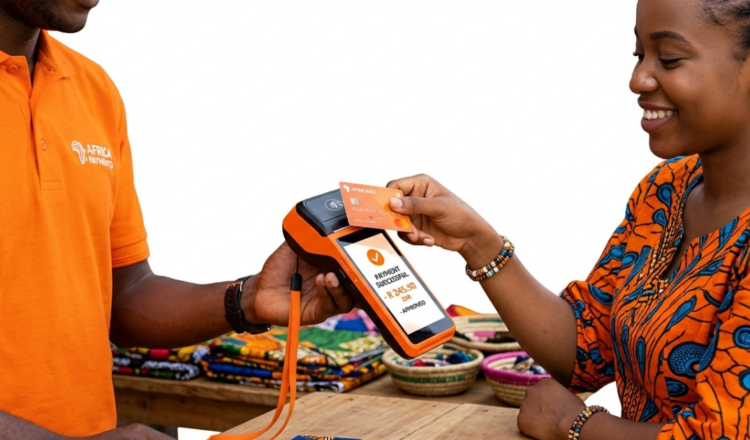
The Future of Real-Time Payments in African Markets

Introduction: Real-Time Is No Longer Optional
Payments are no longer expected to be fast.
They are expected to be instant.
Across global markets, real-time payments are becoming the standard. Users expect:
- Immediate transaction confirmation
- Instant fund availability
- Seamless payment experiences
In Africa, this shift is even more significant.
Because real-time payments are not just about convenience, they are about
access, efficiency, and economic participation
What “Real-Time Payments” Actually Mean
Real-time payments are often misunderstood as simply “fast payments.”
In reality, they involve:
- Instant authorization
- Immediate processing
- Real-time settlement (or near-real-time)
- Instant confirmation to both parties
This requires:
- always-on systems
- low-latency infrastructure
- reliable connectivity
Africa’s Unique Starting Point
Africa has a different baseline compared to traditional markets.
In many regions:
- Mobile-first payments dominate
- Banking infrastructure is uneven
- Financial systems are fragmented
At the same time, Africa has:
- Skipped legacy systems in some areas
- Adopted mobile money at scale
- Built highly dynamic payment ecosystems
This creates a paradox:
High adoption of digital payments — but inconsistent real-time performance across systems.
The Current Limitations
Despite progress, real-time payments across African markets face challenges:
1. Fragmented Systems
Different providers operate independently, leading to:
- inconsistent speeds
- varying success rates
2. Settlement Delays
Even if payments are initiated quickly:
- settlement may be delayed
- reconciliation may not be instant
3. Infrastructure Gaps
Some systems lack:
- 24/7 availability
- real-time processing capabilities
4. Cross-Market Complexity
International payments introduce:
- additional latency
- regulatory constraints
- currency conversion delays
The Demand for Real-Time Is Increasing
The push toward real-time payments is driven by:
Users
- expect instant transfers
- demand seamless experiences
Businesses
- need faster cash flow
- require immediate confirmation
Platforms
- compete on speed and reliability
Result:
Real-time is becoming a competitive necessity, not a differentiator.
The Infrastructure Behind Real-Time Payments
Real-time payments are not just a front-end experience.
They depend on:
- backend processing systems
- routing logic
- settlement mechanisms
- connectivity across providers
Key requirement:
Every layer must operate in real time — not just the interface.
The Role of Payment Infrastructure Platforms
To achieve real-time payments across fragmented systems, infrastructure becomes critical.
Platforms like Unipesa enable:
- unified access to multiple payment methods
- real-time transaction routing
- cross-market connectivity
- performance optimization
How Unipesa Enables Real-Time Capabilities
Unipesa supports real-time payments by:
1. Unified API Access
- reducing integration complexity
- enabling faster transaction initiation
2. Smart Routing
- selecting optimal payment paths
- improving transaction success rates
3. Multi-Rail Connectivity
- connecting mobile money, banks, and cards
- enabling faster processing across systems
4. Continuous Monitoring
- tracking performance in real time
- adapting to system conditions
From “Fast Enough” to “Instant by Design”
Traditional systems aim to be:
- fast
Modern systems must be:
- instant by design
This requires:
- real-time decision-making
- dynamic routing
- system-wide coordination
The Role of International Payments
Real-time expectations now extend beyond local transactions.
Businesses and users expect:
- near-instant international payments
- transparent processing
- predictable outcomes
Challenge:
International payments involve:
- multiple systems
- currency conversion
- regulatory checks
Future direction:
Real-time capabilities will extend across borders through optimized infrastructure.
The Emergence of Intelligent Payment Systems
Real-time payments are increasingly combined with:
- AI-driven optimization
- predictive routing
- automated decision-making
This leads to:
self-optimizing payment systems
Reliability as a Core Requirement
Real-time systems must also be reliable.
This means:
- high uptime
- low failure rates
- consistent performance
Without reliability:
- speed loses value
With reliability:
- real-time becomes sustainable
The Future Landscape
The future of real-time payments in Africa will include:
1. Greater Standardization
- more unified payment protocols
2. Improved Infrastructure
- better connectivity
- more resilient systems
3. Real-Time by Default
- instant processing becomes the norm
4. Deeper Integration
- systems connected across markets
5. Intelligent Optimization
- AI-enhanced routing and decision-making
The Strategic Shift
The shift is not just technological.
It is structural.
From:
- fragmented systems
- isolated providers
To:
- connected infrastructure
- unified processing
Conclusion: Real-Time as the Foundation of Modern Payments
Real-time payments are not just an upgrade.
They represent:
a new standard for financial interaction
In African markets, achieving this standard requires the following:
- strong infrastructure
- system connectivity
- continuous optimization
Platforms like Unipesa play a central role in enabling this transformation.
Because in the future:
Payments will not be judged by whether they work —
but by how instantly and reliably they happen.