White-Label Wallets vs. White-Label Payment Gateways: Understanding the Difference
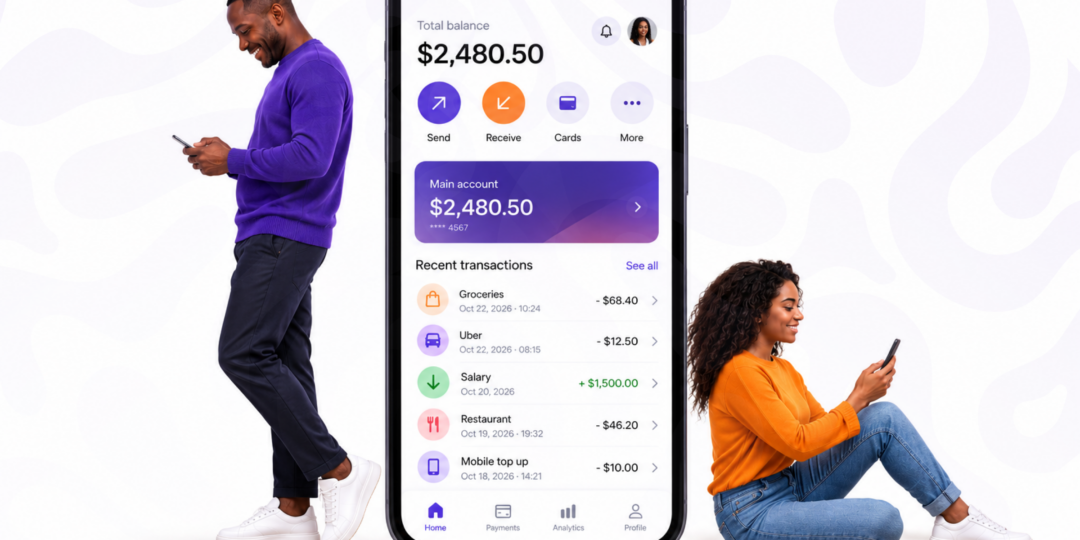
Both technologies help businesses launch financial services without building everything from scratch. However, they solve different problems, support different business models, and require distinct infrastructure capabilities.
Introduction: Two Technologies, Two Different Roles
White-label financial technology is changing how businesses enter the payments market. Instead of developing complex financial systems independently, fintech startups, payment service providers (PSPs), banks, and other companies can integrate existing infrastructure into their products.
Two solutions frequently considered during this process are white-label digital wallets and white-label payment gateways.
At first glance, they may appear similar. Both enable digital financial transactions, support branded financial services, and can connect businesses with payment providers.
However, their underlying functions are fundamentally different.
A white-label payment gateway primarily enables businesses to accept and process payment requests through connected financial providers.
A white-label wallet provides infrastructure for maintaining user accounts or balances, recording value movements, and supporting financial transactions within a wallet-based environment.
The distinction matters because these technologies address different customer needs and create different commercial opportunities.
A merchant-focused fintech company may need a payment gateway to accept customer payments. A financial services provider developing a consumer application may require wallet infrastructure to support stored balances and transfers.
Some businesses may eventually need both.
Understanding how these systems differ is essential for selecting the right infrastructure, estimating development costs, and building a sustainable fintech business.
What Is a White-Label Payment Gateway?
A white-label payment gateway is payment technology developed by an infrastructure provider and made available for other businesses to integrate into their branded services.
Its primary purpose is to facilitate payment acceptance.
When a customer makes a purchase, the gateway helps transmit the payment request to the relevant processing infrastructure and returns information about the transaction outcome.
Depending on the platform, a payment gateway may support cards, bank transfers, mobile money, digital wallets, and other payment methods.
For example, an online retailer may integrate a payment gateway into its checkout process.
When a customer selects a payment method, the gateway communicates with the relevant provider and supports the transaction workflow.
A simplified process looks like this:
Customer → Merchant Checkout → Payment Gateway → Payment Provider → Transaction Result
The gateway may also provide functionality for transaction reporting, payment status monitoring, refunds, and integration with merchant applications.
However, a gateway does not necessarily hold customer funds or maintain stored-value accounts.
Payment authorization, clearing, settlement, and custody of funds depend on the financial institutions and regulated entities involved.
For businesses, the principal value of a white-label gateway is the ability to introduce payment acceptance without developing every underlying technical component.
What Is a White-Label Digital Wallet?
A white-label digital wallet is technology that allows businesses to develop branded wallet-based financial services using infrastructure supplied by an external provider.
Unlike a payment gateway, a wallet typically focuses on managing user accounts, balances, and transactions within a defined financial environment.
Depending on the product, wallet infrastructure may support account creation, balance management, transfers, transaction histories, and integration with external payment services.
For example, a fintech startup may launch a digital wallet application that allows customers to receive funds, maintain balances, and transfer money to other users.
The wallet platform records relevant financial activity and maintains the information required to manage those balances.
A simplified wallet transaction may look like this:
User Account → Wallet Ledger → Transaction Processing → Recipient Account
However, wallet products vary significantly.
Some wallets store monetary value through an authorized financial institution or e-money issuer. Others primarily store payment credentials and initiate transactions without maintaining a monetary balance.
This distinction affects both the technology architecture and regulatory requirements.
For businesses planning to launch stored-value wallet services, accurate ledger management and appropriate financial partnerships are essential.
The Fundamental Difference: Payment Acceptance vs. Value Management
The most important difference between white-label wallets and payment gateways is their primary function.
A payment gateway enables transactions between customers and merchants through connected payment infrastructure.
A wallet provides an environment for managing user financial activity, which may include balances, transfers, and payments.
Consider a customer purchasing a product online.
If the customer pays using a bank card, the merchant’s payment gateway helps process the payment through the relevant financial network.
If the customer pays using a stored-value wallet, the wallet system may authorize a debit from the customer’s balance and coordinate the corresponding payment to the merchant.
The two technologies can therefore participate in the same transaction while performing different roles.
A gateway focuses on payment acceptance and processing connectivity.
A wallet focuses on the customer’s financial account or payment instrument.
This difference influences infrastructure requirements, commercial models, regulatory responsibilities, and the types of businesses each solution is designed to support.
White-Label Wallets vs. Payment Gateways: Key Differences
| Feature | White-Label Wallet | White-Label Payment Gateway |
|---|---|---|
| Primary purpose | Manage wallet accounts, balances, and financial activity | Enable payment acceptance and processing connectivity |
| Main users | Consumers, merchants, businesses, and financial service customers | Merchants, PSPs, marketplaces, and digital platforms |
| Core functionality | Wallet management, ledger operations, transfers, and supported payments | Payment initiation, provider connectivity, transaction status, and reporting |
| Stored balances | May support stored monetary value, depending on the wallet model | Generally does not maintain customer stored-value balances |
| Typical business model | Wallet services, transfers, subscriptions, and additional financial products | Transaction fees, merchant services, subscriptions, and integration services |
| Main infrastructure requirement | Account and ledger management | Payment provider integrations and transaction processing |
| Regulatory considerations | May involve e-money issuance, safeguarding, and payment services | May involve payment processing, acquiring, aggregation, or other regulated activities |
| Common applications | Consumer wallets, merchant wallets, remittance applications, embedded finance | E-commerce checkout, merchant payments, payment platforms, and marketplaces |
The distinction is not absolute. Some modern fintech platforms combine wallet functionality, payment gateways, and payment orchestration within a broader infrastructure environment.
Nevertheless, understanding the primary role of each component helps businesses select the appropriate technology.
How the Infrastructure Architecture Differs
White-label wallets and payment gateways require different foundational systems.
A payment gateway is primarily concerned with transaction communication and processing workflows.
Its architecture may include payment APIs, provider integrations, authentication mechanisms, transaction monitoring, and reporting.
The platform must manage payment requests and maintain accurate information about transaction outcomes.
A wallet platform requires additional capabilities related to account and balance management.
These may include user account records, ledger infrastructure, transaction posting, balance controls, and reconciliation.
For stored-value wallets, the ledger is particularly important.
It records financial movements and helps ensure that account balances accurately reflect authorized transactions.
Errors in ledger management can create serious financial and operational problems.
A payment gateway also requires accurate records, but it does not necessarily maintain the underlying customer balances.
This difference is important when estimating implementation complexity.
A company launching a wallet-based financial service may need additional infrastructure and operational controls beyond those required for a basic merchant payment gateway.
Why Wallet Ledger Infrastructure Matters
The ledger is one of the most important components of a stored-value wallet platform.
It maintains records of financial movements between accounts.
For example, when one wallet user transfers funds to another, the system must accurately record the corresponding debit and credit.
A properly designed ledger supports consistency, traceability, and reconciliation.
Many financial systems use double-entry accounting principles to maintain balanced transaction records.
This helps prevent situations where funds are incorrectly created, duplicated, or removed from account balances.
Wallet platforms must also manage transaction states.
A transfer may be initiated, pending, completed, reversed, or rejected.
The system needs to maintain accurate records throughout these stages.
For fintech companies, ledger reliability is not simply a technical consideration.
It is fundamental to financial trust.
A wallet application may offer an attractive interface, but customers ultimately depend on the accuracy and availability of their funds.
Payment Gateways Depend on Financial Connectivity
While wallet infrastructure emphasizes account and balance management, payment gateways depend heavily on connectivity with external financial providers.
A gateway may need to communicate with acquiring banks, card processors, mobile money operators, or other payment services.
Each provider may have different technical requirements.
For businesses operating across multiple markets, these integrations can become complex.
A gateway supporting payment acceptance in one country may require additional connections before serving merchants elsewhere.
This is particularly relevant in Africa, where payment preferences and financial infrastructure vary considerably between markets.
A white-label payment gateway can reduce integration complexity by providing access to supported payment connections through a common platform.
However, the gateway’s capabilities depend on its actual provider relationships and technical integrations.
Businesses should verify supported payment methods, settlement arrangements, transaction currencies, and market availability before selecting a solution.
How Payment Orchestration Fits Into the Comparison
Payment orchestration is related to payment gateways but serves a broader infrastructure function.
A payment gateway provides an interface for accepting and processing payment requests.
Payment orchestration coordinates transactions across multiple payment providers or processing connections.
Depending on the solution, orchestration may support routing rules, provider selection, operational monitoring, and consolidated reporting.
For example, a PSP may connect to several payment providers through an orchestration platform.
The system can manage supported payment routes through a common integration environment.
This can improve flexibility when businesses need to support multiple markets or payment methods.
Wallet platforms may also connect to orchestration infrastructure.
For example, a wallet may use external payment providers to support deposits, withdrawals, or merchant payments.
In this arrangement, the wallet manages the user account and relevant balance records, while the payment infrastructure supports movement of funds through external financial networks.
The technologies are therefore complementary rather than mutually exclusive.
Revenue Models: How White-Label Payment Gateways Make Money
White-label payment gateways are commonly associated with merchant-focused revenue models.
A PSP may charge merchants for processing transactions through its platform.
Pricing can include a percentage of transaction value, a fixed transaction fee, or a combination of both.
The platform operator must then account for processing costs, infrastructure fees, and other operational expenses.
Additional revenue opportunities may include merchant subscriptions, setup fees, premium reporting, technical integrations, and value-added services.
For example, a PSP may offer basic payment acceptance alongside advanced reconciliation tools or merchant analytics.
These services can create opportunities to generate recurring revenue beyond transaction fees.
However, payment processing margins can be narrow.
Profitability depends on transaction volumes, merchant acquisition costs, payment provider pricing, operational efficiency, and customer retention.
A white-label gateway reduces certain technology development requirements, but the business still needs a sustainable commercial strategy.
Revenue Models: How White-Label Wallets Make Money
Wallet businesses can operate through several commercial models.
Depending on the product and regulatory structure, revenue may come from transfer fees, merchant payments, subscriptions, or other financial services.
A consumer wallet may charge fees for selected transactions.
A merchant wallet may support payment collection, transfers, and financial management services.
A business wallet may provide additional functionality for managing payments or financial operations.
Wallet platforms can also support embedded financial products through appropriate partnerships.
For example, a wallet provider may integrate services offered by regulated lending or insurance institutions.
However, wallet profitability depends on more than the number of registered users.
Businesses need to consider active users, transaction frequency, customer acquisition costs, operational expenses, and the economics of moving funds into and out of the wallet environment.
A wallet with a large number of inactive accounts may generate limited commercial value.
The strongest wallet business models encourage recurring, useful financial activity.
Which Solution Is Better for Merchant Payments?
For businesses focused primarily on helping merchants accept customer payments, a white-label payment gateway is often the more direct starting point.
A gateway provides the infrastructure needed to connect merchant checkout experiences with supported payment providers.
This makes it relevant to e-commerce platforms, online marketplaces, PSPs, and other merchant-facing businesses.
A merchant may need to accept cards, mobile money, or bank transfers without maintaining a separate wallet balance for every customer.
In such cases, wallet infrastructure may introduce unnecessary complexity.
However, a merchant platform may eventually benefit from wallet functionality.
For example, a business could introduce merchant balances, internal transfers, or other supported financial services.
This would require additional account management and appropriate regulatory arrangements.
The decision should therefore reflect the actual merchant proposition.
Businesses should avoid introducing wallet functionality simply because it appears to offer more features.
The additional complexity must be justified by customer needs and commercial value.
Which Solution Is Better for Consumer Financial Services?
For businesses developing consumer-focused financial applications, wallet infrastructure may be more relevant.
A wallet can provide a foundation for services involving account management, transfers, and supported payment functionality.
For example, a fintech startup may want customers to maintain balances and transfer funds between accounts.
A gateway alone would not necessarily provide the ledger and account management capabilities required for this model.
However, a wallet application may still need payment gateway integrations.
Customers may need to fund their wallets through cards, bank transfers, or mobile money.
They may also need to withdraw funds or make payments to external merchants.
These activities require connectivity with appropriate financial providers.
Therefore, consumer wallet platforms often depend on both internal wallet infrastructure and external payment services.
The business model determines how these components should be combined.
White-Label Wallets and International Payments
Wallet infrastructure can also support certain international payment use cases.
For example, a remittance application may provide wallet accounts through which customers receive funds or initiate transfers.
The wallet can manage relevant account information and transaction records.
However, international transfers require additional infrastructure.
Businesses may need access to foreign exchange services, payout providers, banking partners, and regulated money transfer arrangements.
A wallet alone does not create an international remittance network.
Similarly, a payment gateway does not automatically provide the licensing or financial relationships required to move funds internationally.
For companies developing international payment services, the technology architecture may combine wallet functionality, payment processing, orchestration, and specialized transfer infrastructure.
The appropriate structure depends on the target markets, payment flows, and regulatory requirements.
Why the Difference Matters in African Markets
Africa’s financial ecosystem includes a diverse combination of banks, mobile money services, card networks, digital wallets, and local payment systems.
This diversity creates different opportunities for wallet and gateway providers.
In markets where mobile money is widely used, businesses may need gateway infrastructure that connects merchants with supported mobile payment methods.
In other markets, consumer wallet applications may provide financial services tailored to specific customer needs.
A merchant-focused PSP may prioritize payment acceptance across several local methods.
A fintech company targeting consumers may prioritize account functionality, transfers, and wallet-based services.
Businesses expanding across African markets also need to consider differences in financial regulation.
Stored-value wallets may be subject to specific e-money requirements, while payment gateway operators may fall under different licensing or authorization frameworks.
The precise obligations depend on the jurisdiction and the role performed by the business.
Selecting the wrong infrastructure model can create unnecessary development costs and regulatory complexity.
Regulatory Requirements Are Not Interchangeable
One of the most important distinctions between wallet and gateway businesses involves regulation.
A company offering stored-value wallet services may require authorization to issue electronic money or operate through an appropriately licensed financial institution.
Requirements may include safeguarding customer funds, maintaining accurate financial records, and implementing customer identification and transaction monitoring controls.
Payment gateway businesses may face different obligations depending on whether they provide technology only or perform regulated payment activities.
For example, a technology provider supplying payment software may have different responsibilities from an entity that acquires merchants, aggregates payments, or handles settlement funds.
Using white-label infrastructure does not automatically transfer regulatory authorization from the technology provider to the customer.
Businesses must determine which entity is responsible for each regulated activity.
This is particularly important when expanding into multiple African jurisdictions.
A technology solution that can support transactions in several markets does not necessarily provide legal authorization to operate financial services in all of them.
Security Considerations for Wallets and Gateways
Both technologies require strong security controls, but their risk profiles differ.
Payment gateways must protect payment information, secure transaction communications, and manage access to processing functionality.
Depending on the payment methods involved, relevant card security standards and financial provider requirements may apply.
Wallet platforms must also protect account access, transaction records, and potentially stored monetary value.
Account takeover, unauthorized transfers, and ledger integrity are important considerations.
A compromised wallet account may expose customers to direct financial losses.
Both systems benefit from secure authentication, encryption, monitoring, access controls, and incident response procedures.
However, security requirements should reflect the specific financial functions performed.
A business selecting white-label technology should evaluate the provider’s security architecture, operational resilience, and responsibilities under the commercial agreement.
Can a Fintech Business Use Both?
Yes. In many cases, combining wallet and gateway infrastructure creates a more complete financial product.
Consider a fintech company developing a merchant financial services platform.
The payment gateway enables merchants to accept customer payments through supported payment methods.
The wallet infrastructure may provide merchant accounts or balances, depending on the product design.
Additional integrations could support transfers, payouts, or other financial services.
A simplified combined architecture may look like this:
Customer Payment → Payment Gateway → Payment Provider → Settlement Process → Merchant Wallet or Account
The exact flow depends on the payment method, settlement arrangements, and regulated entities involved.
Not every payment needs to pass through a wallet.
Similarly, not every wallet transaction requires an external gateway.
The advantage of combining the technologies is the ability to support different financial workflows within a connected environment.
However, businesses should introduce additional infrastructure only when it supports a clear commercial requirement.
How to Choose Between a White-Label Wallet and a Payment Gateway
The selection process should begin with the financial service the business intends to deliver.
A company focused on merchant payment acceptance should evaluate gateway infrastructure first.
A business planning to offer stored balances and account-based transfers should assess wallet technology.
Companies developing broader financial ecosystems may require both.
Several questions can guide the decision:
- Who is the primary customer? Merchants, consumers, businesses, or financial institutions?
- What financial activity must the platform support? Payment acceptance, stored balances, transfers, or several functions?
- Which payment methods are required? Cards, mobile money, bank transfers, or other local methods?
- Will the business maintain customer balances? If so, ledger architecture and regulatory requirements become central.
- Which markets will the platform serve? Local integrations and financial regulations may differ.
- What is the revenue model? Transaction fees, subscriptions, wallet services, or additional financial products?
- How will the product evolve? The infrastructure should support realistic expansion requirements.
These questions help businesses avoid investing in technology that does not match their commercial strategy.
How Unipesa Supports Different Financial Infrastructure Models
Unipesa, a portfolio company of Velex Investments, focuses on developing scalable fintech infrastructure for businesses operating across African markets.
Its technology portfolio includes payment orchestration, digital wallets, POS infrastructure, lending solutions, communication services, API-driven integrations, and international payment capabilities.
These technologies address different requirements within modern financial ecosystems.
Payment orchestration supports the broader need to connect and coordinate payment services across supported providers and methods.
Digital wallet infrastructure provides technology relevant to account-based financial products and wallet functionality.
POS infrastructure supports merchant payment acceptance, while API-driven integrations allow businesses to connect selected financial capabilities with their own applications.
For fintech startups, PSPs, and financial institutions, this modular infrastructure approach creates opportunities to develop products around specific business requirements.
A merchant-focused company may prioritize payment acceptance and processing connectivity.
A consumer financial services provider may require wallet functionality.
A business developing a broader financial ecosystem may need several connected infrastructure components.
Specific white-label configurations, supported integrations, wallet capabilities, and commercial arrangements depend on the relevant Unipesa solutions and implementation requirements.
The strategic advantage of modular infrastructure is the ability to select technology based on the financial service being developed rather than adopting unnecessary components.
Conclusion: Different Technologies, Complementary Opportunities
White-label wallets and white-label payment gateways are both important components of modern financial infrastructure.
However, they serve different purposes.
Payment gateways primarily enable businesses to accept payments through connected financial providers.
Wallet platforms support account-based financial services, which may include stored balances, transfers, and other wallet transactions.
The distinction influences technology architecture, regulatory requirements, revenue models, and operational responsibilities.
For African fintech companies, choosing the appropriate solution is particularly important because payment methods, financial partnerships, and regulatory frameworks vary between markets.
Businesses focused on merchant payment acceptance may find gateway infrastructure more suitable.
Companies developing consumer financial services or account-based products may require wallet technology.
Others may benefit from combining both within a broader financial platform.
The most effective strategy is not to select the technology with the largest number of features.
It is to identify the infrastructure that supports the intended financial service, commercial model, and long-term growth objectives.
A payment gateway helps businesses accept money. A stored-value wallet helps users manage and move money. Understanding that difference is the foundation for building the right fintech product.