Agentic Commerce and the Future of Payment Infrastructure
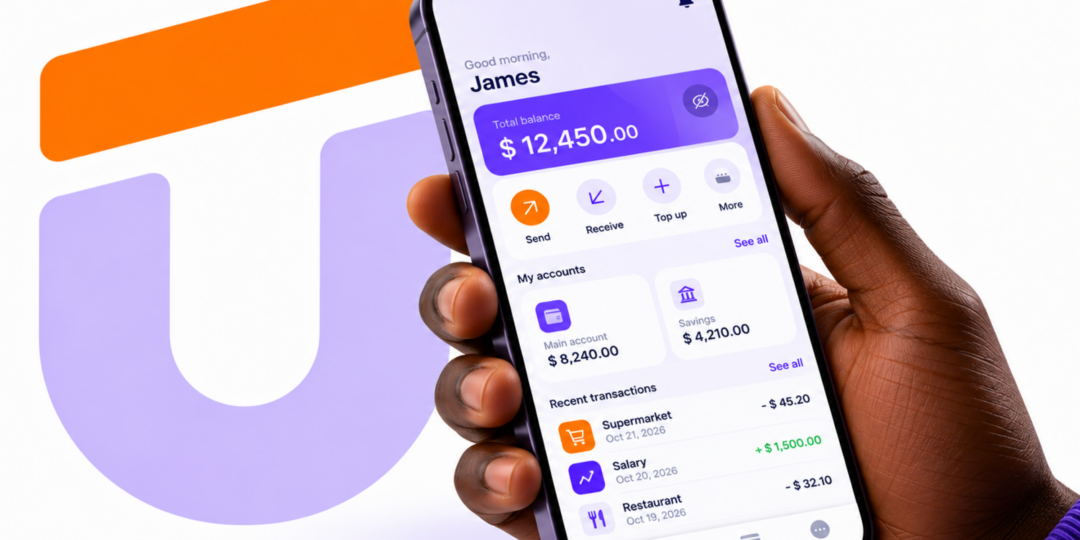
How AI agents are changing the way transactions are initiated, authorized, and processed—and why the next generation of digital commerce will depend on intelligent, interoperable payment infrastructure.
Introduction: When AI Becomes the Customer
For decades, digital commerce has followed a familiar pattern. A customer visits a website or application, searches for a product, compares available options, enters payment details, and confirms a purchase. Payment infrastructure operates behind the scenes, connecting merchants, financial institutions, and payment networks to complete the transaction.
Artificial intelligence is beginning to challenge this model.
Instead of navigating every stage of the purchasing process manually, consumers and businesses may increasingly delegate selected commercial activities to AI agents. These systems can search for products, compare prices, evaluate suppliers, manage subscriptions, and prepare transactions according to predefined instructions.
More advanced agents may eventually complete authorized purchases without requiring users to interact with traditional checkout interfaces.
This emerging model is known as agentic commerce.
It represents a shift from digital commerce driven entirely by human interaction toward commerce in which software agents can participate in purchasing decisions and transaction workflows.
For payment service providers (PSPs), banks, fintech companies, and merchants, the implications extend far beyond customer experience.
Existing payment infrastructure was largely designed around human-initiated transactions. Agentic commerce introduces new requirements for identity, authorization, payment execution, fraud prevention, interoperability, and transaction accountability.
The next generation of payment platforms must be capable of processing transactions initiated through intelligent software while maintaining the security and reliability expected of financial systems.
Agentic commerce is not simply a new way to shop. It is a new operating model for digital transactions—and payment infrastructure will determine how successfully it develops.
What Is Agentic Commerce?
Agentic commerce refers to commercial activities in which AI-powered software agents perform tasks on behalf of consumers or businesses.
Unlike conventional recommendation engines, which primarily suggest products or services, agentic systems can coordinate multiple steps toward a defined objective.
For example, a consumer might instruct an AI assistant to find a flight within a specific budget, compare available options, and book the most suitable itinerary.
A business might use an AI agent to identify suppliers, evaluate pricing, monitor inventory levels, and prepare purchase orders.
In more advanced implementations, these agents could initiate payments after verifying that the transaction meets the user’s authorization conditions.
The process can be represented as:
User Intent → AI Agent → Product or Service Selection → Authorization → Payment Infrastructure → Transaction Execution
The important distinction is that the AI agent acts as an intermediary between the customer’s objective and the systems required to complete the transaction.
However, agentic commerce does not necessarily mean unrestricted autonomous spending.
A user may authorize an agent to complete purchases only within specific financial limits, from approved merchants, or for particular categories of products.
Other transactions may require explicit confirmation before execution.
This makes authorization architecture a central component of agentic commerce.
From Traditional E-Commerce to Agent-Driven Transactions
Traditional e-commerce platforms are built around human navigation.
Customers browse products, interact with checkout interfaces, choose payment methods, and authorize purchases.
Even when merchants introduce automation, the customer usually remains directly involved in initiating the final transaction.
Agentic commerce changes this relationship.
An AI agent may handle product discovery, supplier comparison, and transaction preparation before the customer reaches a checkout interface—or without requiring a conventional checkout experience at all.
Consider a business purchasing office supplies.
Under a traditional model, an employee identifies required products, compares suppliers, creates an order, and completes payment.
Under an agentic model, an AI system could monitor inventory, identify replenishment needs, compare approved suppliers, and prepare a purchase that complies with company procurement policies.
If the transaction falls within an established authorization framework, the system may be permitted to complete it automatically.
This creates a different commercial workflow.
Instead of designing every transaction around human interaction, merchants and payment providers must support software-driven purchasing processes.
The underlying payment infrastructure must be capable of receiving structured requests, validating authorization, and executing transactions securely.
Why Agentic Commerce Requires a New Payment Architecture
Existing payment systems already support significant automation.
Recurring payments, subscription billing, scheduled transfers, and API-based transactions are established components of digital financial services.
However, agentic commerce introduces additional complexity.
Traditional automation generally follows predefined instructions. An AI agent may interpret a broader objective, evaluate several options, and select a transaction based on changing conditions.
For example, an automated system might pay a recurring invoice on a fixed date.
An AI agent could potentially compare multiple service providers, identify a more suitable option, and recommend switching suppliers before initiating payment.
The financial infrastructure must therefore distinguish between a valid transaction request and an authorized commercial decision.
A payment platform cannot assume that a transaction is legitimate simply because it originates from a software system.
It needs mechanisms to establish which customer or business the agent represents, what actions the agent is permitted to perform, and whether the specific transaction falls within those permissions.
This introduces an additional layer between commercial intent and financial execution.
Agent Identity → Delegated Authority → Transaction Validation → Payment Execution → Audit Trail
Payment infrastructure that supports these functions will be better positioned for agent-driven commerce.
Agent Identity: Knowing Who Is Initiating the Transaction
Identity is one of the most important challenges in agentic commerce.
Traditional payment systems use various mechanisms to identify customers, authenticate payment credentials, and verify transaction authorization.
When an AI agent participates in the purchasing process, another question emerges: how does the payment system know that the agent is acting legitimately on behalf of a particular user?
An agent may have access to a shopping account, business application, or payment interface.
However, access to an application does not automatically establish permission to spend money.
Payment infrastructure needs a reliable way to connect the agent’s actions to an identifiable customer or organization.
This may involve delegated authorization credentials, cryptographic signatures, secure tokens, or other mechanisms that establish the relationship between the user and the agent.
For enterprise applications, the requirements may be even more detailed.
A company might authorize one agent to purchase office supplies while allowing another to manage approved software subscriptions.
Both agents could operate within the same organization but have different spending limits and permissions.
Agent identity therefore becomes an extension of financial access management.
The objective is to ensure that payment systems can distinguish legitimate delegated transactions from unauthorized or manipulated activity.
Delegated Authorization Will Become Essential
Agentic commerce requires more sophisticated authorization models than simply granting an application access to payment credentials.
A user may want an AI agent to make purchases, but only under specific conditions.
These conditions could include maximum transaction amounts, approved merchant categories, geographic restrictions, purchasing frequency, and expiration dates for delegated permissions.
For example, a business might authorize an AI procurement agent to purchase supplies from approved vendors within a monthly budget.
If the agent identifies a transaction outside those conditions, the payment system should require additional approval or reject the request.
This creates a distinction between the agent’s ability to recommend an action and its authority to execute that action.
A useful model separates three levels of capability:
Read Access: The agent can retrieve information about products, transactions, balances, or payment status.
Decision Support: The agent can compare options, prepare payment instructions, and recommend actions.
Execution Authority: The agent can initiate specified financial transactions within explicitly authorized limits.
Not every AI agent needs execution authority.
In many financial applications, the most appropriate model will combine intelligent recommendations with human approval for higher-risk activities.
The infrastructure must support these different levels of autonomy without compromising transaction security.
Payment APIs Become the Execution Layer for AI Agents
AI agents cannot complete financial transactions through reasoning alone.
They need reliable connections to payment systems.
This is where API-driven infrastructure becomes particularly important.
Payment APIs allow applications to initiate transactions, retrieve payment information, manage supported payment operations, and communicate with financial providers.
In an agentic commerce environment, APIs become the interface through which authorized AI systems interact with financial infrastructure.
An agent might determine that a transaction meets the user’s requirements, but the actual payment must still be processed through a secure financial system.
The architecture can be represented as:
AI Agent → Authorization Layer → Payment API → Payment Orchestration → Financial Provider → Settlement Network
Each component performs a different function.
The AI agent interprets the commercial objective. The authorization layer verifies permissions. The payment API submits the transaction request, while the underlying infrastructure manages processing through the relevant financial networks.
This separation is important because it prevents AI systems from becoming unrestricted financial execution environments.
The agent provides intelligence and decision support.
The payment infrastructure provides controlled transaction execution.
Payment Orchestration Will Become More Important
Agentic commerce could increase the value of payment orchestration.
AI agents may operate across different merchants, platforms, currencies, and payment methods.
A single agent could interact with several suppliers or service providers, each using different payment infrastructure.
Without orchestration, these interactions may require separate integrations and transaction workflows.
Payment orchestration provides a common infrastructure layer for coordinating multiple payment providers and methods.
In an agent-driven environment, this can simplify transaction execution.
For example, an AI agent may prepare a payment instruction for a merchant operating in a particular country.
The orchestration platform can determine which supported payment connection is appropriate based on the transaction’s characteristics and established business rules.
Routing may consider provider availability, payment method compatibility, transaction costs, and operational requirements.
The AI agent does not need to understand every underlying financial integration.
It interacts with a structured payment interface while the orchestration layer manages connectivity.
This division of responsibilities can make agentic commerce more scalable.
Agentic Commerce Will Need More Than Card Payments
Much of the early discussion around agentic commerce focuses on online shopping and card-based payments.
However, the broader opportunity extends to multiple payment methods.
In African markets, consumers and businesses use combinations of mobile money, bank transfers, cards, digital wallets, QR payments, and instant payment systems.
Agentic commerce will need to accommodate this diversity.
An AI agent purchasing a service from a merchant in Kenya may encounter different payment requirements from one completing a transaction in South Africa or Ghana.
A platform designed exclusively around card-based checkout may struggle to support these environments.
Multi-rail payment infrastructure provides a more flexible foundation.
By connecting different payment methods through APIs and orchestration, fintech platforms can potentially support agent-initiated transactions across diverse financial ecosystems.
The challenge is not simply enabling the agent to select a payment method.
The infrastructure must also support appropriate authorization, confirmation, settlement, and reconciliation for each rail.
This makes interoperability particularly important for the future of agentic commerce in Africa.
Machine-to-Machine Payments: The Next Commercial Frontier
Agentic commerce also creates opportunities beyond consumer shopping.
As businesses adopt AI agents, commercial transactions may increasingly occur between software systems.
A procurement agent could interact with a supplier’s ordering system. A logistics platform could automatically purchase approved transportation services. A software agent could manage usage-based subscriptions or digital services within predefined budgets.
These interactions create demand for machine-to-machine payment capabilities.
However, machine-to-machine commerce is not equivalent to unrestricted autonomous payments.
Financial transactions still require identifiable parties, valid authorization, contractual accountability, and appropriate compliance controls.
The difference is that software systems may handle more of the operational workflow.
Payment infrastructure must therefore support programmable transactions while preserving clear responsibility for the financial activity.
This could expand the role of PSPs from processing merchant payments toward enabling automated commercial interactions between businesses and digital services.
Fraud Prevention Must Adapt to Agent-Driven Commerce
Agentic commerce introduces new fraud and security risks.
An attacker may attempt to impersonate an authorized agent, manipulate purchasing instructions, compromise delegated credentials, or redirect transactions.
AI systems may also be exposed to malicious content designed to influence their decisions.
For example, a compromised merchant page could contain instructions intended to make an AI shopping assistant ignore the user’s purchasing restrictions.
This type of manipulation creates risks that differ from conventional payment fraud.
Payment providers will need to combine existing security controls with mechanisms designed for delegated and automated transactions.
Relevant capabilities may include secure agent authentication, transaction-level authorization, spending limits, behavioral monitoring, and audit trails.
High-risk transactions may require additional verification.
The infrastructure should also distinguish between information supplied by external sources and instructions authorized by the customer.
An AI agent’s recommendation should not automatically become a valid payment instruction.
The financial system must independently verify whether execution is permitted.
Reconciliation and Auditability Become More Complex
As AI agents initiate more commercial activity, businesses will need clear records explaining how transactions were created and authorized.
Traditional payment reconciliation focuses on matching transaction records, provider reports, and settlement information.
Agentic commerce adds another dimension: the relationship between the user’s original instruction and the resulting financial transaction.
For example, a business may need to determine which agent initiated a purchase, which policy authorized it, which supplier was selected, and whether the transaction complied with established spending limits.
This information becomes important for financial reporting, internal controls, dispute resolution, and regulatory oversight.
Payment infrastructure should therefore support structured records that connect agent activity with transaction execution.
These records may include agent identifiers, authorization references, transaction timestamps, payment outcomes, and relevant approval events.
The objective is to create accountability across the entire transaction lifecycle.
An agent-driven payment should be explainable and traceable, even when the customer did not manually interact with a traditional checkout interface.
The Emerging Standards Behind Agentic Payments
The development of agentic commerce is encouraging payment networks and technology companies to explore new approaches to delegated transactions.
Initiatives such as Visa Intelligent Commerce, Mastercard Agent Pay, and Google’s Agent Payments Protocol illustrate growing industry interest in enabling AI-assisted and agent-initiated payments.
Although their architectures and commercial approaches differ, they address related questions around agent identity, authorization, transaction security, and interoperability.
These developments suggest that agentic commerce will require more than simply connecting a language model to an existing payment API.
It will need shared mechanisms for establishing trust between customers, AI agents, merchants, and payment providers.
However, the ecosystem remains at an early stage.
Industry initiatives should not be interpreted as evidence that universal interoperability or widespread autonomous payment acceptance already exists.
Standards, implementation models, and regulatory expectations will continue to evolve.
For PSPs and infrastructure providers, the practical priority is to develop flexible architectures capable of accommodating emerging authorization and transaction protocols without requiring complete platform redesigns.
Why Agentic Commerce Matters for African Fintech
Africa’s digital financial ecosystem presents a distinctive opportunity for agentic commerce.
The continent includes highly developed mobile money markets, growing digital banking ecosystems, expanding instant payment infrastructure, and diverse merchant payment environments.
However, this diversity also creates operational complexity.
A consumer or business operating across several African markets may need to navigate different financial applications, payment methods, and transaction processes.
AI agents could eventually simplify some of these interactions.
For example, an agent might help a business compare available payment options, prepare supplier payments, or monitor transaction status across connected services.
A merchant-facing AI assistant could help business owners understand settlement reports or investigate unsuccessful payments.
These applications may be particularly valuable for SMEs that lack dedicated financial operations teams.
Nevertheless, agentic commerce in Africa will depend on the availability of reliable payment APIs, local payment connectivity, identity infrastructure, and appropriate authorization mechanisms.
The region’s payment diversity makes infrastructure interoperability essential.
AI can simplify the user experience, but the underlying financial systems must still be capable of executing transactions across different rails.
Agentic Commerce Could Transform Merchant Platforms
Merchants may experience agentic commerce from two directions.
First, they may begin receiving orders initiated by AI agents acting on behalf of customers.
Second, they may use their own AI agents to manage purchasing, inventory, payments, and financial operations.
Both developments create new requirements for merchant platforms.
An online merchant may need structured product information, machine-readable pricing, reliable inventory data, and payment interfaces that support authorized agent interactions.
A physical retailer using a connected POS platform could potentially integrate AI tools for inventory analysis, supplier ordering, and transaction reporting.
For example, a merchant system might identify that a frequently purchased product is running low.
An AI agent could compare approved suppliers and prepare a replenishment order.
After the merchant or an established policy authorizes the purchase, the transaction could be executed through connected payment infrastructure.
This illustrates how agentic commerce may extend beyond online checkout into broader merchant operations.
The POS platform becomes part of a connected commercial environment rather than simply a payment acceptance device.
Digital Wallets Could Become Agent Payment Interfaces
Digital wallets may also play an important role in agentic commerce.
Wallet infrastructure can provide mechanisms for managing payment instruments, transaction information, and financial activity.
In an agent-driven environment, wallets could potentially support delegated payment permissions and controlled access to eligible financial services.
For example, a user might authorize an agent to make certain purchases within a defined spending limit.
The wallet or connected authorization system could verify whether the transaction meets those conditions before allowing execution.
For businesses, similar mechanisms could support controlled procurement budgets or automated operational payments.
However, wallet infrastructure must distinguish between access to financial information and permission to move funds.
Secure delegated authorization, transaction monitoring, and clear revocation mechanisms will be essential.
The opportunity is to make wallets part of a programmable financial environment while preserving user control.
Agentic Commerce and Cross-Border Payments
Cross-border commerce introduces additional complexity for AI agents.
A transaction between parties in different countries may involve currency conversion, local payment methods, settlement arrangements, and regulatory requirements.
An AI agent could potentially help compare available payment options or prepare transactions based on cost, speed, and supported payment routes.
However, actual execution depends on the infrastructure available and the permissions granted.
Payment orchestration and cross-border payment infrastructure can provide the technical connectivity required to process supported transactions.
For African businesses trading across regional and international markets, this could eventually simplify selected payment workflows.
A business agent might identify an approved supplier, prepare an invoice payment, and submit the transaction through an authorized financial interface.
The underlying payment platform would still be responsible for processing the transaction according to applicable financial and regulatory requirements.
This reinforces the importance of separating AI decision-making from financial execution.
How PSPs Should Prepare for Agentic Commerce
Payment service providers do not need to rebuild their entire infrastructure around AI agents immediately.
However, they should begin evaluating whether their existing systems can support more programmable and automated transaction environments.
The most important preparation areas involve API accessibility, identity management, authorization, interoperability, transaction monitoring, and auditability.
1. Develop API-First Payment Infrastructure
Financial capabilities should be accessible through secure, well-documented APIs rather than relying exclusively on human-facing interfaces.
2. Strengthen Delegated Authorization
Payment platforms should be able to distinguish between a user, an application, and an agent acting on the user’s behalf.
3. Support Multiple Payment Rails
Agentic commerce will need access to different payment methods, particularly in markets where cards are not the only dominant payment instrument.
4. Improve Transaction Observability
PSPs should maintain reliable records of transaction initiation, authorization, processing, and settlement.
5. Introduce Risk-Based Controls
Automated transactions should operate within clearly defined permissions, with additional verification for higher-risk activity.
6. Build Flexible Integration Architecture
Infrastructure should be capable of accommodating emerging agent payment standards and authorization protocols as the market develops.
7. Separate Intelligence From Execution
AI systems may recommend or prepare transactions, but payment execution should remain governed by secure financial infrastructure and explicit authorization rules.
These principles can help PSPs prepare for agentic commerce while improving the reliability and flexibility of their existing platforms.
The Economics of Agentic Commerce
Agentic commerce could also influence the economics of payment processing.
As AI agents become involved in purchasing decisions, merchants may compete not only for human attention but also for selection by automated systems.
Product availability, pricing transparency, delivery conditions, and payment compatibility could become increasingly important.
For PSPs, this may create demand for infrastructure that supports automated transaction initiation and reliable machine-readable payment information.
Payment platforms may also gain opportunities to provide additional services around authorization, fraud prevention, transaction intelligence, and reconciliation.
However, agentic commerce could introduce new costs.
Advanced identity verification, risk monitoring, API traffic, and transaction governance may increase infrastructure requirements.
The commercial opportunity will depend on whether providers can deliver these capabilities efficiently and whether merchants and businesses find sufficient value in agent-driven transactions.
The strongest infrastructure businesses may be those that make automated commerce secure, reliable, and economically practical.
How Unipesa Fits Into the Future of Agentic Commerce
Unipesa, a portfolio company of Velex Investments, focuses on developing scalable fintech infrastructure for businesses operating across African markets.
Its technology portfolio includes payment orchestration, POS infrastructure, digital wallets, lending solutions, communication services, API-driven integrations, and international payment capabilities.
These infrastructure areas are relevant to the development of agentic commerce because AI-driven transactions depend on programmable access to financial services.
Payment orchestration can provide a framework for connecting different payment providers and methods, while APIs enable applications to interact with financial infrastructure through structured interfaces.
Digital wallet infrastructure may support new approaches to financial access and transaction management, while POS platforms connect payment capabilities with merchant operations.
Communication services can also play a role in customer notifications, transaction updates, and operational workflows.
For fintech companies and PSPs preparing for more automated financial services, the broader opportunity is to develop infrastructure that supports intelligent applications without compromising transaction security and reliability.
Unipesa’s infrastructure-first approach aligns with this direction by emphasizing connectivity, modular financial services, and scalable technology architecture.
Specific AI-agent capabilities, delegated authorization mechanisms, and agentic payment integrations would require dedicated development and validation. They should not be assumed to exist simply because a platform provides financial APIs.
The strategic opportunity lies in creating a financial infrastructure foundation capable of supporting future AI-driven commerce as relevant technologies and standards mature.
Conclusion: AI Agents Will Change Commerce, but Infrastructure Will Make It Work
Agentic commerce represents a potential transformation in how consumers and businesses interact with digital financial services.
AI agents may increasingly search for products, compare suppliers, manage purchasing workflows, and initiate authorized transactions.
However, these capabilities introduce requirements that traditional payment systems were not originally designed to address.
Agent identity, delegated authorization, transaction security, interoperability, and auditability will become increasingly important.
Payment APIs will provide the execution interfaces that connect AI applications with financial systems, while payment orchestration will help manage transactions across different providers and payment methods.
For African fintech companies, the opportunity is particularly significant because intelligent interfaces could simplify access to complex and fragmented payment ecosystems.
Yet the success of agentic commerce will depend on the reliability of the infrastructure beneath it.
AI agents can interpret commercial intent and make recommendations, but financial systems must still verify permissions, execute transactions, and maintain accountability.
The future architecture of commerce may increasingly look like this:
Human Intent → AI Agent → Delegated Authorization → Payment Orchestration → Financial Infrastructure → Transaction Settlement
The customer experience may become simpler, but the infrastructure supporting it will become more sophisticated.
The next generation of commerce will not be defined only by how intelligently AI agents make decisions. It will be defined by how securely and reliably payment infrastructure turns those decisions into authorized financial transactions.