
Can Your POS Do This? The African Retail Revolution Starts at the Checkout
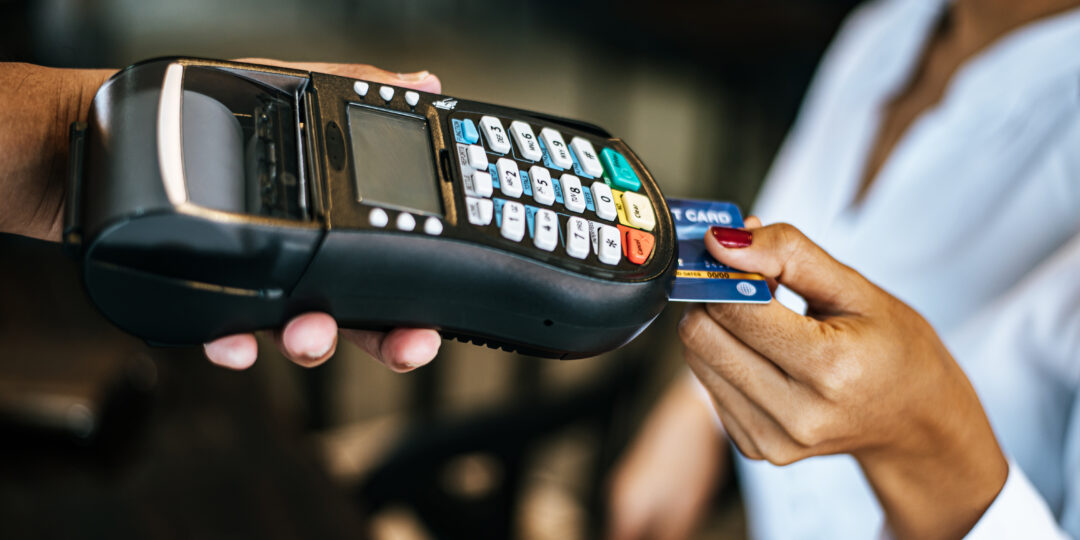
Retail in Africa is changing faster than ever.
Urban markets are expanding. Digital payments are rising. Consumers are younger, more connected, and increasingly mobile-first. Cross-border commerce is growing. Informal businesses are formalizing. And yet, many retailers are still operating with outdated tools.
The checkout counter, often overlooked, has become the center of this transformation.
Because today, a POS terminal isn’t just a device that accepts payments.
It’s a growth engine.
The real question is no longer “Do you accept digital payments?”
It’s “Can your POS actually power your business?”
The Checkout Is No Longer Just a Transaction Point
For decades, the checkout served one purpose: finalize the sale.
Count cash. Print receipt. Move to the next customer.
But in today’s African retail environment, the checkout must do much more:
- Accept multiple payment methods
- Process transactions reliably
- Record real-time sales data
- Trigger inventory updates
- Settle funds predictably
- Generate transaction history
- Enable financial services
Retailers that treat POS as hardware miss the bigger picture.
Retailers that treat POS as infrastructure win.
African Retail Has Unique Demands
African retail is not a copy of Western retail. It operates in a different context:
- High cash circulation
- Intermittent connectivity
- Multiple payment rails (cards, mobile money, wallets)
- Informal and semi-formal business models
- Thin margins
- High daily transaction volumes
A POS system built for stable, single-rail economies often breaks in African conditions.
The African retail revolution requires POS platforms that are:
- Multi-rail
- Resilient
- Wallet-integrated
- API-ready
- Scalable across markets
That’s where infrastructure-first platforms like Unipesa change the equation.
1. Multi-Rail Acceptance: Stop Losing Sales
Customers want flexibility.
Some prefer cards.
Some use mobile money.
Some use digital wallets.
Some switch depending on liquidity.
If your POS only supports one or two methods, you lose sales.
Modern POS platforms unify:
- Card payments
- Mobile money
- Wallet transfers
- Bank-linked digital payments
When checkout friction disappears, conversion rates increase — immediately.
More completed payments = more revenue.
2. Real-Time Visibility: Know Your Business Today, Not Tomorrow
Many retailers only truly understand their revenue at the end of the day — sometimes after manually counting cash.
Modern POS systems provide:
- Real-time sales tracking
- Category performance insights
- Payment breakdowns
- Hourly sales patterns
This transforms retail management from reactive to proactive.
You don’t guess what’s selling.
You know.
And data-driven retailers consistently outperform competitors.
3. Settlement Predictability: Cash Is Instant — Digital Must Compete
Retailers hesitate to go cashless when digital settlement feels uncertain.
If funds are delayed, unpredictable, or unclear, merchants revert to cash.
A strong POS platform integrates directly with merchant wallets and settlement infrastructure, ensuring:
- Transparent timelines
- Automated reconciliation
- Reliable access to funds
Predictability builds trust.
Trust reduces cash reliance.
Reduced cash increases operational efficiency.
4. Cash Reduction Means Profit Protection
Cash handling introduces hidden costs:
- Theft
- Human error
- Unrecorded sales
- Reconciliation disputes
- Security risks
Digital POS transactions:
- Create audit trails
- Reduce shrinkage
- Improve transparency
- Protect margins
Even if nominal sales remain constant, profit improves because losses decrease.
Retailers often discover that digitization doesn’t just increase revenue — it protects it.
5. POS as a Gateway to Credit
Here’s where the revolution becomes transformative.
Cash-only retailers struggle to access:
- Working capital
- Inventory financing
- Short-term loans
Because they cannot prove consistent revenue.
POS systems generate:
- Verified transaction histories
- Performance trends
- Seasonal data
This data enables embedded lending models.
Suddenly, your checkout becomes:
- A revenue tracker
- A credit enabler
- A growth catalyst
That’s when POS stops being a payment tool — and becomes financial infrastructure.
6. Speed at Checkout = More Daily Revenue
African retail often operates on high foot traffic and tight margins.
Long checkout times mean:
- Lost customers
- Abandoned purchases
- Reduced throughput
Digital POS systems:
- Eliminate cash counting
- Speed up confirmation
- Reduce queue time
Faster checkout increases daily transaction capacity.
And in high-volume environments, even small efficiency gains drive meaningful revenue growth.
7. Cross-Border Retail Needs Modern POS
Pan-African commerce is rising.
Retailers increasingly:
- Source goods regionally
- Sell to customers across borders
- Participate in digital marketplaces
POS platforms integrated with multi-currency wallets and regional settlement systems make expansion feasible.
Without that infrastructure, scaling beyond one city — or one country — becomes operationally painful.
8. Hardware Is Not the Strategy – Infrastructure Is
Many POS providers focus on hardware distribution.
But hardware is not strategy.
What matters is:
- The backend ledger
- Wallet integration
- API connectivity
- Compliance logic
- Data analytics
Retailers don’t need devices.
They need systems that scale with them.
That’s why platform-based POS models outperform hardware-only competitors in fast-growing markets.
9. Customer Experience Is Competitive Advantage
Modern African consumers expect:
- Seamless checkout
- Multiple payment options
- Instant confirmation
- Professional experience
A clunky POS setup damages brand perception.
A smooth, digital checkout strengthens trust and repeat behavior.
Retail is increasingly competitive.
Checkout is no longer neutral — it’s strategic.
10. The Retail Revolution Is Data-Driven
The African retail revolution isn’t just about digitizing payments.
It’s about:
- Digitizing insight
- Digitizing trust
- Digitizing access
- Digitizing growth
POS systems generate the data layer that powers:
- Smarter inventory decisions
- Dynamic pricing
- Customer analytics
- Risk scoring
- Financial inclusion
Retailers who adopt advanced POS infrastructure early will build durable advantages.
So, Can Your POS Do This?
Can it:
- Accept every payment your customers prefer?
- Settle predictably?
- Generate real-time business insight?
- Reduce revenue leakage?
- Enable access to credit?
- Scale across markets?
If not, your POS isn’t powering growth.
It’s limiting it.
The Checkout Is Where Transformation Begins
The African retail revolution is not happening in boardrooms.
It’s happening at checkout counters.
Retailers who modernize their POS infrastructure position themselves for:
- Higher revenue
- Better margins
- Financial access
- Long-term scalability
The question is no longer whether digital POS matters.
It’s whether your POS is built for the future of African retail.
Because in Africa’s next growth phase, the winners won’t just sell products.
They’ll own the infrastructure that powers every sale.