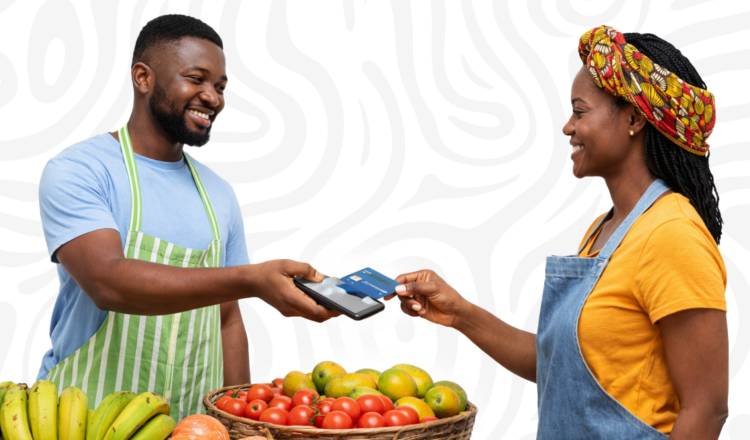
Can Your POS Do This? Africa's Retail Revolution

Introduction: The Checkout Is No Longer Just a Checkout
For years, the checkout counter was viewed as the final step in a customer journey.
A customer selected a product.
A payment was processed.
A receipt was printed.
Transaction complete.
Today, that model is rapidly becoming outdated.
Across Africa, retailers are facing a new reality:
- customers expect digital experiences
- payment preferences are diversifying
- operational efficiency is becoming critical
- financial services are increasingly embedded into commerce
As a result, the modern POS system is evolving from a payment terminal into a business platform.
The question is no longer:
Can your POS accept payments?
The real question is:
What else can your POS do?
For forward-thinking retailers, the answer increasingly determines competitiveness, customer loyalty, and long-term growth.
The Traditional POS Is Reaching Its Limits
Historically, POS systems focused on a narrow set of functions:
- payment acceptance
- receipt generation
- basic transaction records
This worked when retail was primarily cash-based and customer expectations were relatively simple.
Today’s retail environment looks very different.
Customers want:
- multiple payment options
- seamless checkout experiences
- digital engagement
- personalized services
Retailers need:
- real-time visibility
- inventory insights
- customer intelligence
- operational automation
Traditional POS systems were never designed for these requirements.
Retail Is Becoming Digital Infrastructure
One of the most important shifts in commerce is that payments are becoming connected to every part of the business.
Modern POS systems increasingly support:
- payment processing
- inventory synchronization
- customer management
- loyalty programs
- financial services
- business analytics
The checkout counter is no longer a standalone endpoint.
It is becoming a business intelligence hub.
Can Your POS Accept Multiple Payment Methods?
Consumers increasingly expect flexibility.
Across African markets, payment preferences vary significantly.
Customers may prefer:
- mobile wallets
- account transfers
- QR payments
- digital payment apps
- traditional card payments
A retailer that supports only one or two payment methods creates friction.
A retailer that supports multiple payment options creates convenience.
Key insight:
Convenience directly influences conversion rates.
Can Your POS Help You Understand Customers?
Every transaction generates data.
Most businesses collect this information.
Few businesses fully utilize it.
Modern POS platforms can provide visibility into:
- purchase behavior
- transaction frequency
- customer preferences
- peak sales periods
These insights help retailers make smarter decisions.
Instead of guessing:
- what sells best
- when demand increases
- which customers return
Retailers can rely on data.
Can Your POS Drive Loyalty?
Customer acquisition is expensive.
Retention is increasingly important.
Modern POS systems can support:
- rewards programs
- cashback campaigns
- customer segmentation
- digital promotions
This transforms payments into engagement opportunities.
Rather than ending at checkout, customer relationships continue after the transaction.
Can Your POS Enable Financial Services?
One of the most significant changes in retail is the convergence of commerce and finance.
POS systems are increasingly becoming gateways to:
- merchant financing
- working capital products
- wallet services
- installment payments
For small businesses, this can unlock entirely new opportunities.
A POS system that understands transaction activity can help create access to financial products that would otherwise be unavailable.
Can Your POS Reduce Operational Complexity?
Retail operations involve far more than payments.
Businesses must manage:
- inventory
- staff
- reporting
- reconciliation
Disconnected systems create inefficiencies.
Modern POS infrastructure increasingly connects these functions through a single environment.
Result:
- fewer manual processes
- better visibility
- improved operational efficiency
Can Your POS Scale With Your Business?
Many retailers begin with simple requirements.
As they grow, complexity increases.
Expansion often requires:
- additional locations
- new payment methods
- higher transaction volumes
- deeper analytics
The right infrastructure should scale alongside the business.
Replacing systems every time a company grows is not sustainable.
Why Infrastructure Matters More Than Hardware
Historically, retailers evaluated POS solutions based on hardware features.
Today, the more important consideration is infrastructure.
Questions that matter include:
- How many payment methods are supported?
- How easily can new services be added?
- Can the system integrate with other platforms?
- Can it support future growth?
The future belongs to connected systems, not isolated devices.
The Role of Modern Payment Infrastructure
Behind every advanced POS experience is a strong infrastructure layer.
Infrastructure platforms such as Unipesa help businesses access:
- multiple payment rails
- transaction processing capabilities
- payment orchestration
- scalable connectivity
This enables merchants to move beyond basic payment acceptance and build richer customer experiences.
The Retail Revolution Starts at the Checkout
Retail transformation is often discussed in terms of:
- e-commerce
- AI
- customer experience
But one of the biggest changes is happening in a place many businesses overlook:
the checkout counter.
The checkout is becoming:
- a data source
- a financial gateway
- a customer engagement tool
- a business intelligence platform
Retailers that recognize this shift early will gain a significant advantage.
Looking Ahead
Over the next few years, POS systems will continue evolving toward:
- API-driven functionality
- embedded finance
- intelligent transaction routing
- integrated loyalty ecosystems
- real-time business analytics
The most successful retailers will not simply process transactions.
They will use payment infrastructure as a growth engine.
Conclusion
The role of POS systems is changing rapidly.
What was once a simple payment terminal is becoming a strategic business platform.
The question is no longer:
Can your POS process payments?
The better question is:
Can your POS help your business grow?
In Africa’s rapidly evolving retail landscape, the answer may determine who leads the next generation of commerce.