Why Wallet-Based Payouts Are the Fastest Way to Pay Gig Workers in Nigeria
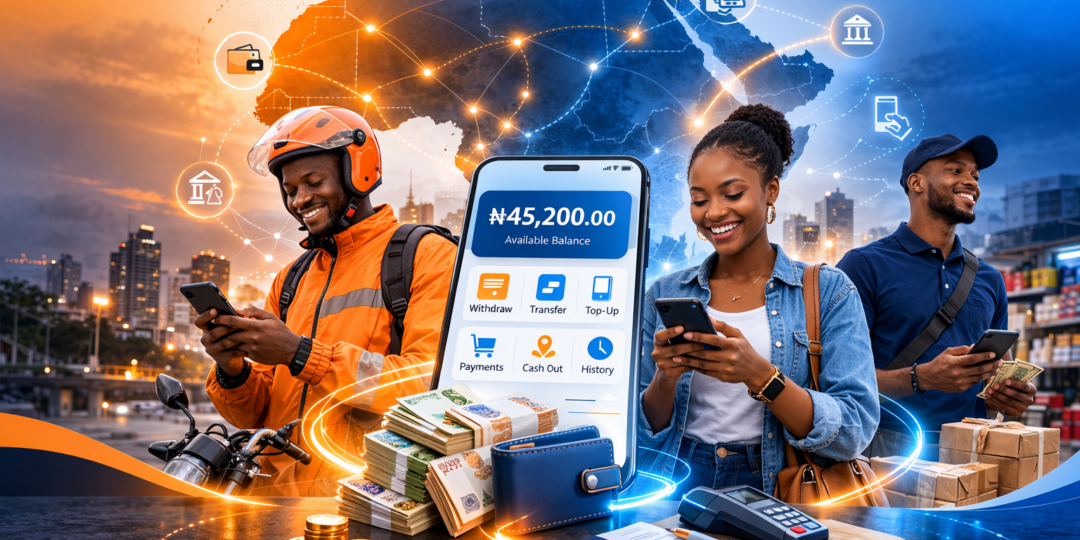
Nigeria’s gig economy is expanding rapidly.
From ride-hailing drivers and dispatch riders to delivery agents, freelance creatives, field sales agents, and marketplace vendors — millions of Nigerians now depend on flexible, on-demand income streams.
But while digital platforms have modernized how gig workers earn, many still rely on outdated payout systems.
Delayed transfers. Failed bank disbursements. Reconciliation confusion. Settlement bottlenecks.
In a fast-moving gig economy, payout speed is not just an operational detail; it is trust infrastructure.
And in 2026, wallet-based payouts are emerging as the fastest, most scalable way to pay gig workers in Nigeria.
The Problem With Traditional Bank Payouts
Most gig platforms initially rely on direct bank transfers for worker payouts.
On paper, this sounds simple:
- Calculate earnings
- Trigger transfer
- Confirm settlement
But in practice, issues arise:
- Transfer delays during peak hours
- Failed disbursements
- Bank processing limitations
- Weekend and holiday slowdowns
- Manual reconciliation of overhead
For gig workers who depend on daily liquidity, payout uncertainty damages trust.
When workers don’t get paid instantly, platforms feel unreliable, regardless of how well the product performs.
Nigeria’s Liquidity Reality
In Nigeria, liquidity is immediate and personal.
Gig workers use earnings to:
- Buy fuel
- Purchase mobile data
- Pay rent
- Restock inventory
- Support family expenses
Delayed payouts create operational strain.
Speed isn’t convenience — it’s survival.
This is why platforms are increasingly shifting from bank-based payouts to wallet-based disbursement models.
What Are Wallet-Based Payouts?
Wallet-based payouts route earnings directly into a digital wallet rather than a bank account.
That wallet can:
- Store value instantly
- Enable immediate transfers
- Support merchant payments
- Allow cash-out via agents
- Connect to cards or bank accounts
Instead of waiting for traditional bank rails, workers receive funds in real time within a controlled ecosystem.
The difference in experience is significant.
1. Instant Settlement Improves Worker Retention
Gig platforms compete for labor.
When workers compare platforms, payout speed is often decisive.
Wallet-based systems allow:
- Instant disbursement after job completion
- Daily automatic payouts
- Real-time earning visibility
Faster payouts increase:
- Worker satisfaction
- Platform loyalty
- Reduced churn
- Higher job acceptance rates
Liquidity becomes a retention strategy.
2. Reduced Failed Transfers
Bank payouts in Nigeria can fail due to:
- Incorrect account details
- Network congestion
- Bank downtime
- API instability
Wallet-based payouts reduce these risks by:
- Operating within a controlled infrastructure
- Maintaining internal ledger accuracy
- Allowing retry logic and failover systems
Infrastructure-first providers such as Unipesa enable wallet ecosystems designed for scalable disbursement, reducing payout friction across high-volume platforms.
Reliability compounds trust.
3. Lower Operational Overhead
Managing bank payouts requires
- Batch processing
- Error resolution
- Manual reconciliation
- Customer support handling
Wallet payouts simplify operations by:
- Automating transaction records
- Providing instant ledger updates
- Reducing dispute frequency
- Centralizing reporting
Platforms spend less time troubleshooting payouts and more time improving service quality.
4. Built-In Financial Services Enablement
When earnings enter a wallet ecosystem, platforms unlock new possibilities:
- Micro-savings tools
- Short-term lending
- Fuel financing
- Merchant discounts
- Insurance products
Wallet-based payouts transform gig platforms into financial ecosystems.
Embedded finance increases worker stickiness and monetization potential.
5. Agent Network Integration for Cash-Out
Nigeria’s hybrid cash-digital environment requires flexibility.
Wallet systems can integrate with:
- Agent networks
- POS terminals
- Merchant cash-out points
This allows gig workers to convert digital balance into physical cash when necessary.
Unlike pure bank models, wallet ecosystems support hybrid liquidity access.
That flexibility is critical in Nigeria’s market.
6. Better Fraud and Compliance Control
Wallet infrastructure allows platforms to:
- Monitor transaction behavior
- Set withdrawal limits
- Track suspicious activity
- Implement tiered KYC
Bank transfers alone offer limited visibility into downstream use.
Wallet ecosystems provide richer monitoring capabilities — essential for scaling responsibly.
7. Programmable Payout Logic
Modern wallet infrastructure supports programmable rules:
- Threshold-based disbursement
- Dynamic fee adjustments
- Commission splits
- Automated deductions
This allows platforms to:
- Deduct service fees instantly
- Allocate earnings to sub-accounts
- Apply repayment logic for advances
Programmability increases financial control and reduces reconciliation complexity.
8. Scalability for High-Volume Platforms
As gig platforms grow, payout volume increases exponentially.
Infrastructure must handle:
- Thousands of daily payouts
- Peak-hour spikes
- Multi-region operations
- Real-time balance updates
Wallet-based systems built on scalable backend architecture outperform fragmented bank-only solutions in high-volume scenarios.
Operational scalability becomes sustainable.
9. Cross-Border Expansion Capability
Some Nigerian gig platforms operate regionally.
Wallet-based infrastructure simplifies:
- Multi-currency payouts
- Cross-border disbursements
- Regional expansion
This reduces dependency on separate banking integrations per country.
For ambitious platforms, wallet-first models future-proof expansion.
10. Worker Experience Matters More Than Ever
Gig workers increasingly expect:
- Transparent earnings dashboards
- Instant balance visibility
- Fast withdrawals
- Financial flexibility
Wallet interfaces deliver a superior user experience compared to delayed bank confirmation flows.
In competitive labor markets, UX drives loyalty.
The Bigger Strategic Shift
Wallet-based payouts are not just faster.
They represent a broader shift:
From:
Bank-dependent disbursement models
To:
Platform-controlled financial ecosystems
When platforms own payout infrastructure:
- Liquidity improves
- Control increases
- Monetization expands
- Risk becomes manageable
- Expansion accelerates
Wallet infrastructure becomes a strategic asset.
What Nigerian Platforms Should Do Now
To stay competitive in 2026, gig platforms should:
- Evaluate payout latency and failure rates.
- Assess worker retention tied to payout speed.
- Explore wallet integration with POS and agent networks.
- Embed compliance monitoring within payout systems.
- Choose infrastructure partners with proven scalability across African markets.
Infrastructure maturity will define platform sustainability.
Final Perspective
Nigeria’s gig economy is expanding rapidly.
Workers demand speed. Platforms demand scalability. Regulators demand compliance.
Wallet-based payouts address all three.
In 2026, the fastest way to pay gig workers in Nigeria will not be traditional bank transfers.
It will be wallet-native, programmable, infrastructure-level disbursement systems designed for high-volume, real-time operations.
Because in the gig economy, liquidity is trust.
And trust scales platforms.