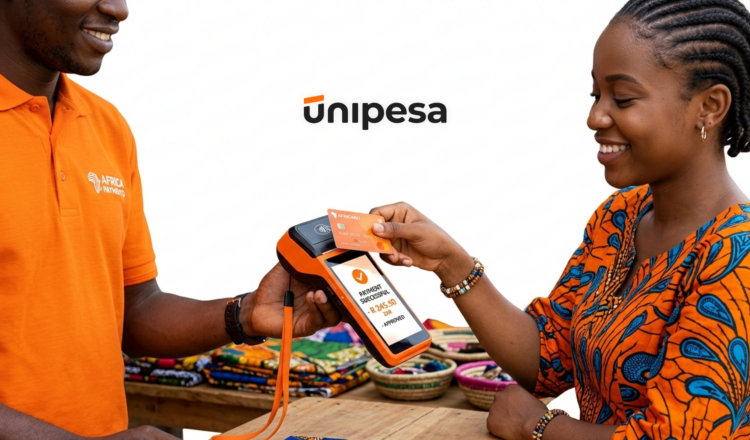
The New Era of SME Lending: How Fintech Is Closing Africa’s Credit Gap

Small and medium-sized enterprises (SMEs) are the backbone of Africa’s economy. They account for more than 80% of employment across the continent and contribute a significant share of GDP. Yet despite their economic importance, African SMEs face one persistent challenge that has limited their growth for decades: access to credit.
The SME credit gap in Africa is estimated to be in the hundreds of billions of dollars. Traditional banks have historically struggled to serve small businesses efficiently, citing high risk, lack of formal documentation, and high operational costs. As a result, millions of viable businesses operate undercapitalized, relying on personal savings or informal lending to survive.
This reality is changing. A new era of SME lending is emerging—driven by fintech platforms, alternative data, and digital financial infrastructure. At the center of this shift are infrastructure providers like Unipesa, which enable lending ecosystems by connecting payments, wallets, data, and APIs into a single, scalable foundation.
Why Traditional SME Lending Has Failed in Africa
For decades, banks have applied models designed for large enterprises to small businesses. These models rely on:
- Formal financial statements
- Collateral-based lending
- Long credit histories
- Manual underwriting processes
Most African SMEs do not meet these criteria. Many operate informally, manage cash flows digitally but inconsistently, and lack collateral recognized by banks. From the bank’s perspective, the cost of assessing and servicing SME loans often outweighs the potential return.
This mismatch created a structural credit gap—not because SMEs are unviable, but because the lending infrastructure was never built for them.
Fintech Is Rewriting the Rules of SME Lending
Fintech platforms approach SME lending from a fundamentally different angle. Instead of asking “What paperwork does this business have?”, they ask “What does this business actually do?”
Modern fintech lending models rely on:
- Transaction data from payments and wallets
- Cash flow visibility instead of balance sheets
- Behavioral data over time
- Automated decision-making
- Embedded financial services
This shift replaces static snapshots with dynamic, real-time insight—making lending more inclusive, faster, and more sustainable.
Payments Data as the New Credit Signal
One of the most powerful enablers of fintech-driven SME lending is payments data.
Every digital transaction tells a story:
- Sales frequency
- Ticket size
- Revenue consistency
- Seasonal patterns
- Customer behavior
When SMEs use digital payments, POS systems, and wallets, they generate a continuous stream of data that can be analyzed to assess creditworthiness.
Infrastructure platforms like Unipesa play a critical role here. By unifying payments, merchant wallets, POS transactions, and payouts under one system, Unipesa enables a holistic view of SME financial activity—the foundation for modern lending models.
From Loans to Embedded Lending
The new era of SME lending is not about standalone loan products. It is about embedded lending—credit that is integrated directly into the tools SMEs already use.
Examples include:
- Short-term working capital offered via merchant wallets
- POS-linked credit based on daily sales
- Automated repayment from future transactions
- Dynamic credit limits that adjust with performance
Embedded lending reduces friction dramatically. SMEs do not need to apply, wait weeks, or navigate complex paperwork. Credit becomes a feature of their financial workflow—not a separate product.
Unipesa’s infrastructure is designed to support this model by allowing lending partners to embed credit logic directly into wallets, payment flows, and merchant dashboards.
Wallets as the Operating Layer for SME Finance
Digital wallets are rapidly becoming the financial operating system for African SMEs. They are used to:
- Receive customer payments
- Pay suppliers
- Manage cash flow
- Store value
- Access additional financial services
When lending is layered onto wallets, it becomes contextual and data-driven.
Unipesa’s Wallet Platform enables:
- Merchant and business wallets
- Real-time balance tracking
- Controlled fund flows
- Automated repayments
- API-based access for lending partners
This turns wallets into distribution channels for credit, dramatically expanding reach without increasing operational complexity.
Reducing Risk Through Continuous Data
One of the biggest misconceptions about SME lending is that inclusion increases risk. In reality, lack of data increases risk.
Traditional lenders make decisions based on limited, outdated information. Fintech lenders, powered by platforms like Unipesa, evaluate SMEs continuously.
This enables:
- Early detection of revenue decline
- Dynamic risk scoring
- Adjustments to credit exposure
- Lower default rates
- More sustainable portfolios
By embedding lending into transaction infrastructure, fintechs reduce uncertainty and align credit availability with real business performance.
Serving Informal and Semi-Formal Businesses
A large portion of African SMEs operate informally or semi-formally. This does not mean they are unproductive—it means the financial system has not adapted to them.
Fintech platforms are closing this gap by:
- Onboarding merchants digitally
- Linking identity to transaction behavior
- Creating verifiable financial histories
- Enabling gradual formalization
As SMEs adopt digital payments and wallets, they become visible to the financial system—often for the first time.
Unipesa supports this transition by making it easy for businesses to accept payments, manage funds, and build data trails that unlock access to credit over time.
Cross-Border SMEs and Regional Trade
African SMEs increasingly operate across borders—trading goods, offering services, and participating in regional digital economies. Traditional banks often struggle to support these businesses due to fragmented regulations and FX complexity.
Fintech lending platforms are beginning to:
- Support multi-currency wallets
- Use regional transaction data for credit assessment
- Enable cross-border repayment flows
Unipesa’s multi-country, multi-currency infrastructure allows lending models to extend beyond national silos—supporting SMEs that operate regionally, not just locally.
The Role of APIs in Scaling SME Lending
Scalable SME lending is impossible without APIs.
APIs allow:
- Real-time access to transaction data
- Automated loan disbursement
- Programmatic repayments
- Integration with third-party lenders
- Rapid product iteration
Unipesa’s API-first architecture allows fintechs, lenders, and platforms to build SME lending products without rebuilding payments and wallet infrastructure from scratch.
This lowers the barrier to entry for innovation and accelerates ecosystem growth.
Regulation and Responsible Lending
As SME lending grows, regulators are paying closer attention. Responsible fintech lending requires:
- Transparent terms
- Fair pricing
- Consumer protection
- Strong KYC and AML controls
- Audit-ready reporting
Infrastructure platforms play a key role in ensuring compliance is built in—not bolted on.
By embedding identity, transaction monitoring, and reporting into its core systems, Unipesa enables lending partners to scale responsibly while meeting regulatory expectations across markets.
Why Infrastructure Matters More Than Products
Many SME lending startups fail not because their models are wrong, but because their infrastructure cannot scale.
The winners in the new era of SME lending are not standalone loan apps—they are platforms built on strong financial rails.
Unipesa represents this shift:
- It does not compete with lenders
- It enables them
- It provides the pipes through which data, payments, and repayments flow
By focusing on infrastructure, Unipesa helps create a lending ecosystem that is faster, safer, and more inclusive.
Conclusion: Closing the Credit Gap Requires Better Foundations
Africa’s SME credit gap will not be closed by copying traditional banking models or launching isolated lending products. It will be closed by rebuilding the financial foundations that support small businesses.
Fintech is making this possible by:
- Turning payments into data
- Turning wallets into platforms
- Turning infrastructure into opportunity
As this new era unfolds, infrastructure-first platforms like Unipesa will play a central role—connecting SMEs, lenders, and financial services into a system that finally works at scale.
The future of SME lending in Africa is not just digital.
It is embedded, data-driven, and platform-powered.