
The Evolution of POS: From Card Reader to Financial Platform
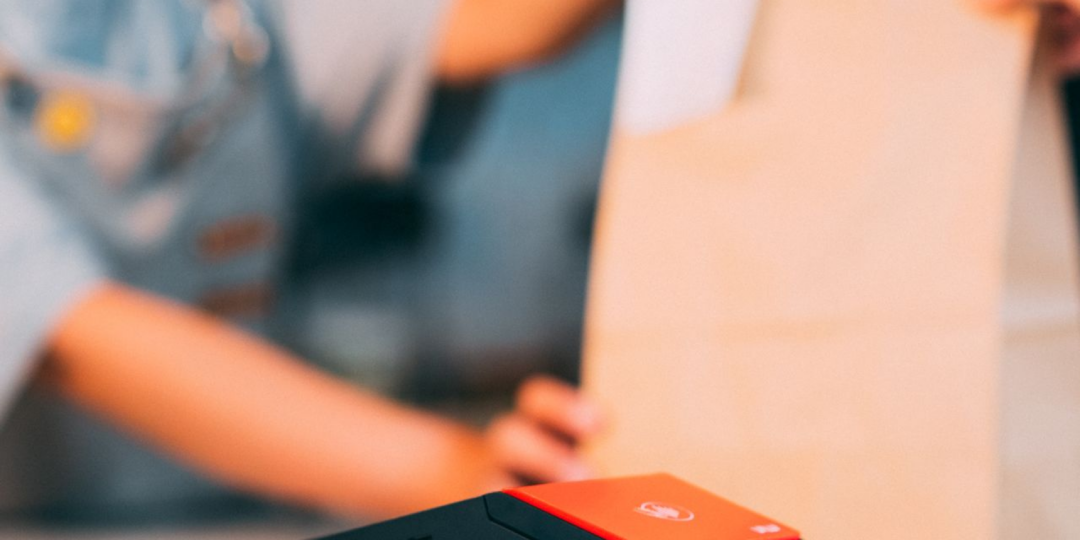
Why the next generation of POS infrastructure will connect payments, data, lending, loyalty and financial services through a single merchant touchpoint
Introduction: The POS Is Becoming Much More Than a Payment Terminal
For decades, the role of the point-of-sale terminal was straightforward.
A customer presented a card. The terminal captured the payment information. The transaction was authorized. The merchant received confirmation.
The POS was essentially the final physical interface in a payment-processing chain.
That definition is rapidly becoming outdated.
Modern POS systems increasingly combine payment acceptance with merchant management, inventory, analytics, loyalty, digital wallets, alternative payment methods and embedded financial services. Cloud connectivity and APIs are transforming what was once a relatively isolated piece of hardware into a programmable business platform.
The shift is particularly important across African markets, where merchants may need to operate across cards, mobile money, bank transfers, QR payments and other local payment methods.
The strategic question is therefore changing.
It is no longer simply:
How does a merchant accept a payment?
It is:
What financial services can be built around the point where commerce happens?
That transition is turning POS infrastructure from a card reader into something much more powerful: a financial operating platform for merchants.
The First Generation of POS Was About Card Acceptance
Traditional POS terminals were built primarily for card transactions.
The architecture was relatively linear:
Card → Terminal → Acquirer → Card Network → Issuing Bank
The terminal’s main responsibility was to securely capture payment information and communicate the transaction to the relevant financial institutions.
This model worked well when card acceptance was the dominant digital payment requirement.
But commerce has changed.
Consumers now expect different ways to pay, while merchants increasingly operate across physical and digital channels.
A device designed primarily to accept cards therefore represents only one part of the modern merchant payment environment.
The POS Became Connected
One of the first major changes was connectivity.
Older terminals depended heavily on fixed telecommunications infrastructure. Mobile and internet connectivity made POS devices significantly more flexible.
Terminals could operate in:
- retail stores
- restaurants
- delivery environments
- temporary locations
- transport
- agent networks
- informal commerce
This was particularly significant in markets where traditional banking infrastructure was less accessible.
Once the terminal became connected, however, something more important happened.
It stopped being simply a hardware device.
It became an endpoint connected to financial software.
That created the foundation for the modern POS platform.
Software Changed the Economics of POS
Cloud-based software made it possible to move much of the intelligence away from the physical terminal.
The device no longer needed to contain every capability locally.
Instead, it could communicate with cloud infrastructure responsible for:
- transaction processing
- merchant management
- reporting
- reconciliation
- software updates
- risk monitoring
- analytics
This changed how POS systems could evolve.
New capabilities could be deployed through software rather than requiring merchants to replace hardware every time the platform changed.
The POS began moving from a product toward a service.
The Modern POS Needs to Accept More Than Cards
One of the biggest drivers of this evolution is payment diversity.
Across many African markets, customers may use combinations of:
- cards
- mobile money
- bank transfers
- QR payments
- digital wallets
- instant payments
A merchant should not need separate devices and operational processes for every payment method.
Modern POS infrastructure can provide a common interface across multiple payment options.
The architecture becomes:
Customer → POS → Payment Infrastructure → Available Payment Rail
The device becomes the entry point.
The infrastructure underneath determines how the payment is executed.
QR Is Expanding What a POS Can Accept
QR payments illustrate this transformation particularly well.
A merchant no longer necessarily needs a card to initiate a digital transaction.
The POS can display or scan a QR code that connects the customer to a wallet, bank account or instant-payment rail.
That allows the same merchant interface to support multiple forms of payment.
South Africa’s evolving QR+ standard provides an interesting example of where this architecture can go. The South African Reserve Bank is developing QR+ as an interoperable payment-initiation standard capable of working across different PSPs, payment rails and stores of value.
The implication for POS infrastructure is significant.
The terminal can increasingly become a universal payment interface rather than a device associated with one payment network.
SoftPOS Pushes the Evolution Further
The distinction between POS hardware and ordinary computing devices is also becoming less rigid.
SoftPOS technology can allow compatible smartphones or tablets to accept contactless payments without requiring a traditional dedicated payment terminal.
For small businesses, this can reduce the cost of digital payment acceptance.
For PSPs, it changes distribution economics.
Instead of deploying specialized hardware to every merchant, payment acceptance can increasingly be delivered through software.
This creates a continuum:
Traditional POS → Smart POS → Mobile POS → SoftPOS
The physical form changes.
The financial infrastructure underneath becomes more important.
The POS Is Becoming a Merchant Operating System
Once the device is connected to cloud infrastructure, it can support capabilities far beyond payment acceptance.
A modern POS platform can potentially manage:
- transactions
- products
- inventory
- employees
- customers
- loyalty
- refunds
- reporting
- accounting integrations
This changes the strategic position of the POS.
Instead of appearing only at the final second of a transaction, the system becomes involved throughout the merchant’s operations.
The POS begins to function as a merchant operating system.
And once a platform becomes central to merchant operations, it becomes an increasingly powerful distribution channel for financial services.
Payments Create Valuable Merchant Data
Every transaction generates information.
Over time, POS infrastructure can develop a detailed picture of merchant activity.
It may reveal:
- transaction volume
- average transaction value
- peak trading periods
- repeat customers
- payment-method preferences
- refund patterns
- revenue trends
This data has operational value.
Merchants can use it to understand their businesses.
PSPs can use aggregated and appropriately governed information to improve infrastructure.
Financial institutions can potentially use transaction histories—subject to applicable permissions and regulation—as additional signals when evaluating merchant financial activity.
The POS therefore becomes not simply a payment device but a data-generation layer.
POS Data Can Support Merchant Lending
This creates one of the most significant opportunities around modern POS infrastructure: embedded credit.
Traditional small-business lending can be difficult when merchants have limited formal financial histories or insufficient documentation.
POS transaction data can provide another view of business activity.
A platform may be able to observe:
- how much the merchant sells
- how consistently it trades
- whether revenue is growing
- how seasonal the business is
- how frequently transactions are refunded
Those signals can potentially support credit assessment.
Instead of requiring a merchant to leave its operating environment and apply separately for financing, credit can increasingly be embedded into the platform it already uses.
The POS becomes a potential distribution channel for working capital.
Repayment Can Be Embedded Too
The integration can extend beyond loan origination.
If financing is provided through the same ecosystem processing merchant payments, repayments can potentially be structured around transaction flows.
For example, a predefined portion of eligible settlement flows could be directed toward repayment, subject to local regulation and contractual arrangements.
This can create a more integrated financial relationship:
Merchant Sales → POS Data → Credit Assessment → Financing → Repayment
The payment platform becomes part of the merchant’s financial lifecycle.
That is fundamentally different from simply renting a card terminal.
POS Can Become a Wallet Interface
Digital wallets create another opportunity.
A POS platform can connect merchants with wallet infrastructure for receiving, storing or transferring funds.
Instead of every transaction immediately moving through separate banking processes, merchants could interact with balances through an integrated financial interface.
Depending on the regulatory model, this could support functions such as:
- receiving settlement
- supplier payments
- transfers
- transaction history
- business expenses
The POS becomes one access point into a broader financial ecosystem.
Loyalty Can Be Embedded Into Payments
Customer loyalty has traditionally operated separately from payment infrastructure.
Customers present a loyalty card, provide a phone number or use a separate application.
Modern POS infrastructure can integrate loyalty directly into the transaction flow.
The system can recognize eligible customers, apply rewards and update loyalty balances alongside the payment.
This creates a more unified experience:
Customer → Payment → Identification → Loyalty → Reward
For merchants, the value extends beyond convenience.
Payment data can help them understand customer behavior and design more relevant retention strategies.
POS Can Connect Physical and Digital Commerce
Modern merchants increasingly operate across several channels.
A retailer may sell:
- in store
- online
- through social commerce
- through marketplaces
- through delivery platforms
If each channel uses independent payment infrastructure, merchant operations become fragmented.
A modern POS platform can become part of an omnichannel architecture connecting physical and digital transactions.
The objective is a unified merchant view.
Instead of treating store payments and online payments as separate businesses, the merchant can manage them through shared infrastructure.
APIs Turn POS Into a Platform
APIs are central to this transformation.
A closed POS device can perform only the functions its manufacturer designed.
An API-enabled POS ecosystem can connect to:
- payment providers
- banks
- wallets
- loyalty systems
- accounting software
- inventory platforms
- lending services
- merchant applications
That creates a platform model.
Third-party services can connect around the merchant’s payment infrastructure.
The POS becomes the physical endpoint of a broader API ecosystem.
Payment Orchestration Can Sit Behind the POS
The next stage is payment orchestration.
If a POS platform supports several providers or payment rails, infrastructure can determine where transactions should be processed.
Routing can consider factors such as:
- payment method
- provider availability
- transaction cost
- geography
- merchant configuration
- historical performance
If one provider becomes unavailable, eligible transactions can potentially be routed through another connection.
The merchant continues using the same interface.
The complexity is handled behind it.
This makes POS reliability increasingly dependent on the quality of the infrastructure underneath the device.
AI Can Make POS Infrastructure More Intelligent
Artificial intelligence adds another layer.
A modern POS system generates continuous transaction and operational data.
AI can use those signals to support:
- fraud detection
- payment routing
- sales forecasting
- inventory planning
- merchant analytics
- credit assessment
- customer segmentation
Imagine a merchant dashboard that does not simply report what happened yesterday.
It identifies that weekend sales are consistently increasing, predicts inventory requirements and highlights unusual payment failures before they materially affect revenue.
The POS evolves from recording commerce to helping interpret it.
AI Agents Could Eventually Operate Through POS Platforms
Agentic AI could take the evolution further.
Instead of simply producing insights, AI agents could eventually perform approved operational actions.
A merchant agent might:
- investigate unusual payment failures
- initiate reconciliation workflows
- monitor settlement
- identify inventory shortages
- recommend supplier payments
- analyze cash-flow needs
Within clearly defined permissions, some actions could potentially be executed automatically.
The POS platform therefore becomes part of the execution environment for increasingly autonomous merchant operations.
POS Infrastructure Can Strengthen Fraud Prevention
The POS also sits at an important point in the fraud-prevention architecture.
Because it interacts directly with merchants and customers, it can provide signals relating to:
- device identity
- merchant behavior
- transaction location
- transaction frequency
- payment method
- refund behavior
Combined with broader payment data, these signals can improve risk analysis.
Fraud prevention therefore becomes more effective when the POS is connected to centralized payment intelligence rather than operating as an isolated terminal.
Agent Networks Make POS Particularly Important in Africa
Across African markets, POS infrastructure can also play an important role in agent banking and financial inclusion.
Agents can provide access to financial services in areas where traditional bank branches are limited.
Depending on the market and regulatory framework, POS-enabled agents can support services such as:
- payments
- deposits
- withdrawals
- transfers
- bill payments
- account services
This gives the POS another role.
It becomes a bridge between digital financial infrastructure and physical communities.
The strategic value of the network therefore depends not only on the number of devices deployed, but on the financial services those devices can deliver.
The Economics Are Moving From Hardware to Services
The traditional POS business was heavily associated with terminal distribution.
The next generation increasingly creates revenue through the services running through the terminal.
Those services can include:
Payment Processing + Software + Lending + Wallets + Analytics + Loyalty + Financial Services
This changes the economics of POS infrastructure.
The hardware becomes the access point.
The platform becomes the business.
That can create deeper merchant relationships and additional recurring revenue opportunities.
Merchant Retention Becomes Stronger
A merchant can replace a basic card terminal relatively easily.
Replacing a platform managing payments, inventory, reconciliation, customer data and financial services is much more disruptive.
As more merchant operations become connected to the POS platform, switching costs increase.
This can create stronger retention.
The platform becomes embedded in how the business operates.
For PSPs, that is strategically important.
The relationship moves from transaction processing toward infrastructure dependency.
The Future POS May Not Look Like a POS
Ironically, as POS infrastructure becomes more important, the traditional POS terminal may become less important.
The interface could be:
- a smart terminal
- smartphone
- tablet
- QR display
- merchant application
- embedded checkout device
The physical form is secondary.
What matters is the infrastructure behind it.
The future of POS is therefore not really about terminals.
It is about creating a programmable financial endpoint wherever commerce occurs.
What This Means for PSPs
For payment service providers, POS should no longer be treated purely as a hardware distribution strategy.
It can become a platform strategy.
The opportunity is to connect:
Merchant → POS → Payments → Data → Financial Services
That requires infrastructure capable of supporting multiple payment methods, APIs, merchant management, orchestration, data and additional financial products.
PSPs that build only payment acceptance may compete increasingly on transaction price.
PSPs that build broader merchant infrastructure can compete on the value of the entire platform.
How Unipesa Fits Into the Evolution of POS
Unipesa, a portfolio company of Velex Investments, is focused on building scalable fintech infrastructure for businesses operating across African markets.
POS infrastructure is one part of a broader technology stack that also includes payment orchestration, API-first integrations, digital wallets, lending solutions, communication services and international payment capabilities.
This broader architecture is important because the future POS does not exist in isolation.
Payments can connect with wallet infrastructure.
Transaction data can support merchant analytics and lending.
APIs can connect external services.
Payment orchestration can manage multiple providers.
Communication infrastructure can support merchant and customer engagement.
The result is a more integrated merchant financial ecosystem.
For Unipesa, the opportunity is therefore not simply to provide another way to accept a transaction.
It is to provide the infrastructure through which POS becomes an entry point into a broader set of financial capabilities.
Conclusion
The POS terminal began as a card reader.
It is becoming something much larger.
Cloud infrastructure transformed the terminal into software.
Alternative payment methods transformed it into a multi-rail acceptance point.
APIs transformed it into a platform.
Transaction data opened opportunities for analytics and lending.
AI is beginning to add intelligence.
And embedded finance can turn the POS into a gateway to broader financial services.
The evolution can be summarized simply:
Card Reader → Connected Terminal → Smart POS → Merchant Platform → Financial Platform
For African fintech, this transformation is particularly important because POS infrastructure sits directly where digital finance meets everyday commerce.
The companies that recognize this shift will not think primarily about deploying more terminals.
They will think about what can be built around every merchant connected to them.
The future of POS is not the device on the counter. It is the financial infrastructure behind it.